
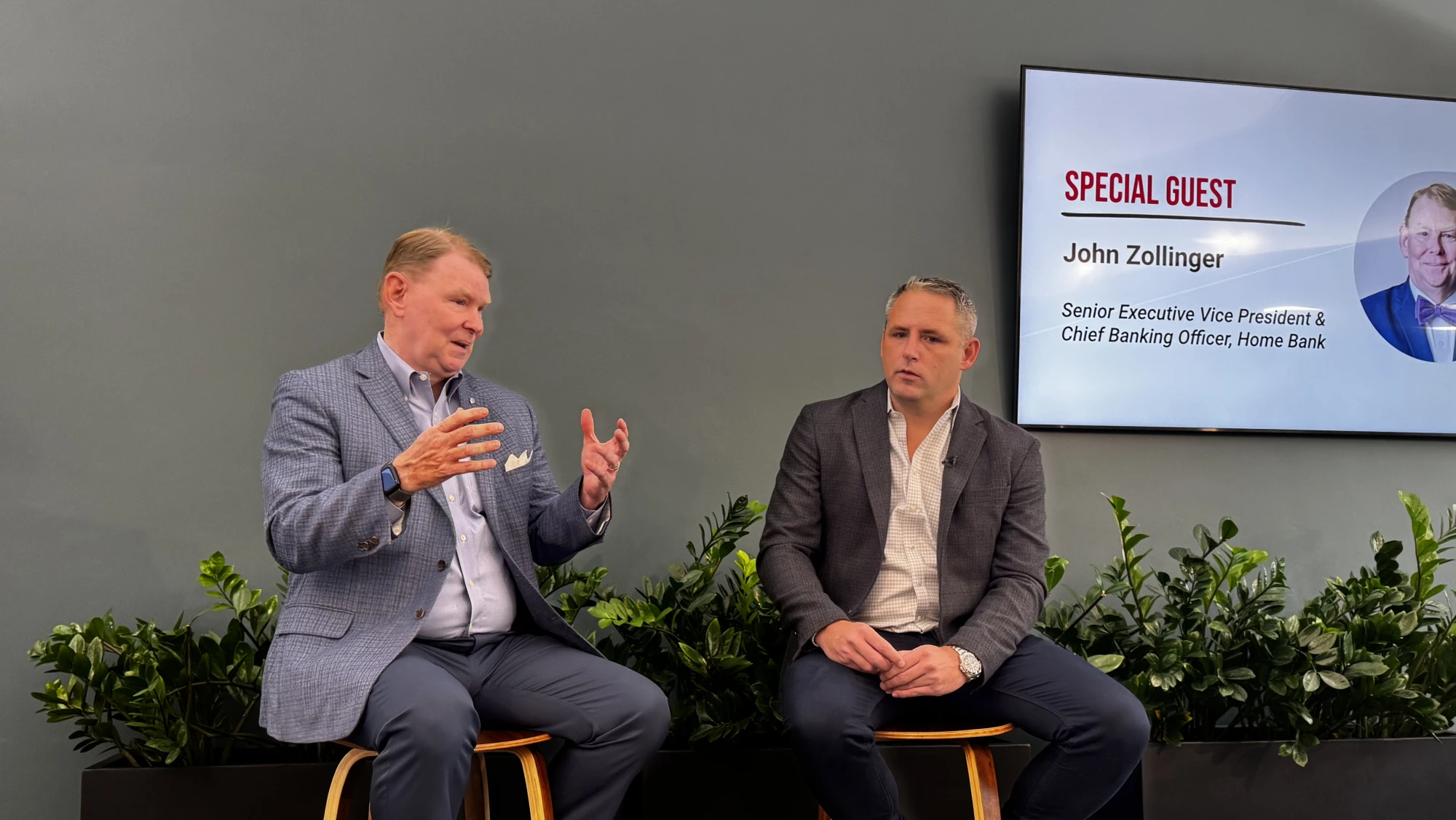

In our latest KW New Orleans session, we were joined by John Zollinger, Senior Executive Vice President and Chief Banking Officer at Home Bank, for an eye-opening and timely discussion. John brought deep insights into the state of lending in a tight market, the risks of modern banking fraud, and the evolving role of relationship-based banking in protecting clients.
Watch the Conversation
A Tight Market for Lending, and an Opportunity for the Right Borrowers
Zollinger described the current financial landscape as “tight”: liquidity is limited across many local banks, and most institutions are focusing on servicing their own clients. “Deposits are our inventory,” he explained. “If we don’t have them, we can’t make loans.”
That said, Home Bank is still actively lending, particularly in owner-occupied commercial real estate. From small businesses like plumbers and doctors to real estate brokerages, banks are eager to lend to those who need space to operate. “It’s the lowest credit risk,” he shared, “and banks will compete for that.”
Real Estate Observations: Equity Opportunities in a Buyer’s Market
Zollinger highlighted how today’s market conditions present a unique opportunity for buyers. With inventory up, it’s become easier for clients to gain instant equity in real estate purchases. For investors and homeowners alike, now may be the perfect time to leverage lending to build long-term value, especially if they’re working with a lender who knows them and can advise them wisely.
The Fraud Epidemic: Why Cybersecurity Must Be Taken Seriously
What started as a banking and lending conversation quickly transitioned into one of the most sobering parts of the morning: fraud prevention.
Zollinger emphasized that business email compromise is now the number one threat facing both banks and the real estate industry. Hackers are infiltrating inboxes, impersonating clients, and rerouting large sums of money with increasingly sophisticated tactics.
“Everything is suspicious,” he warned. “Even if your mother calls you, question it.” The crowd laughed, but the warning was grounded in a serious reality: a growing scam is targeting parents and grandparents, tricking them into sending large sums of money to supposedly help their children or grandchildren in urgent situations. In truth, the family member is safe at home the entire time.
He shared several real-life scenarios including phishing emails, impersonation of wire instructions, and even spoofing bank phone numbers to trick clients into giving away sensitive info.
Practical Steps to Stay Secure
Zollinger and his team shared valuable steps to guard against fraud:
- Use multi-factor authentication and strong, non-obvious passwords.
- Never click links in suspicious emails or texts. Visit the site directly instead.
- Confirm banking details with a phone call, and use a number you trust, not one provided in the email.
- Avoid writing checks when possible; if you must, use gel pens to prevent check washing.
- Use positive pay services for businesses issuing multiple checks.
- Leverage password managers like LastPass (with 2FA) and avoid reusing passwords across platforms.
He also mentioned biometric verification (face/retina) as a rising trend in fraud prevention.
Relationships Matter More Than Ever
A major takeaway? The importance of knowing your banker.
Both Zollinger and his colleagues in attendance Chris emphasized that a strong banking relationship, like those offered by local banks, can be the difference between recovering lost funds and losing them forever.
“We’ve stopped fraud before just because something didn’t feel right,” Zollinger said. “You’re not just a number to us.”
Looking Ahead: AI, Blockchain & Market Rationalization
The session closed with thoughts on the future. While AI will likely make fraud even more convincing, blockchain-based platforms may offer more secure alternatives for title transfers and large transactions. Until then, vigilance and verification remain the best defense.
Despite the cautionary tales, Zollinger left us with optimism: “We’re finally seeing a rationalization between buyer and seller expectations. That’s a good sign for the real estate market.”