

1. The Watchdog That’s Been Watching for 73 Years
Most cities don’t have an organization like the Metropolitan Crime Commission (MCC). Founded in 1952 by the New Orleans business community, the MCC was created with a singular purpose: fight crime and corruption to make the city safer and more prosperous.
Watch the Conversation
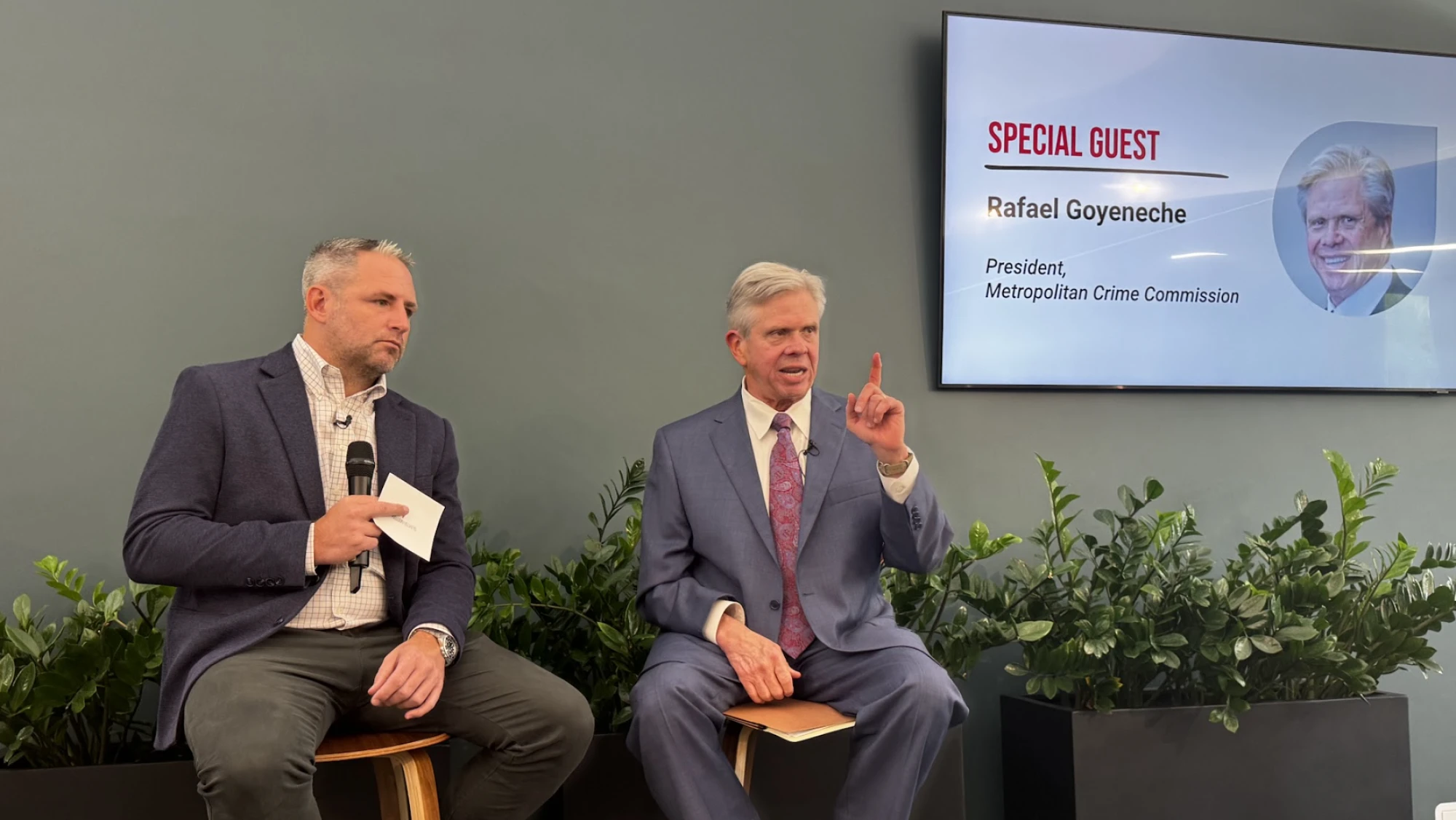
Rafael Goyeneche, its current president, has been at the helm for nearly four decades. He’s a former prosecutor who now leads a team that serves as a confidential bridge between the public and law enforcement. Unlike media outlets that rush to publish tips, the MCC builds full case files, sometimes exceeding 100 pages, so police and prosecutors can act with solid legal footing.
“We’re professionals in crime and corruption,” Goyeneche joked, “but we’ve helped secure over 110 felony corruption convictions since 2015.”
2. Why Crime Really Dropped, And Why It Matters Who Gets Arrested
In a city plagued for years by headlines of violent crime, the numbers have started to shift dramatically:
- New Orleans homicides are down
- The drop exceeds the national average
- Repeat offenders are being targeted, arrested, and kept off the streets
The Key Shift: Proactive, Strategic Policing
Despite being hundreds of officers short, the NOPD has managed to lower crime with help from the Louisiana State Police Troop NOLA, a new 40-person unit designed for high-impact, proactive enforcement, not reactive 911 calls.
Here’s how it works:
- Targeted Traffic Stops: Troopers made 800 stops in six months. Only 100 citations were written, all tied to felony arrests.
- Narcotics Sweeps: When troopers observe suspicious activity, they act, something overburdened NOPD officers don’t have time to do.
“You can’t bring down felony crime by accident,” Goyeneche said. “This is precision law enforcement with a focus on known, violent offenders.”The result? Over 200 people charged with homicides are now in pretrial custody, preventing further crime and reinforcing public trust.
3. Judges, Jail, and a System That Wasn’t Working, Until Now
While police and prosecutors were making arrests, a quiet failure was happening in the courts, until the MCC published the data.
Judicial Backlogs and Biases
In a shocking recent report, the MCC revealed:
- One judge had 412 open cases, costing taxpayers over $5 million in jail expenses.
- Another had only 112 cases with a cost of $900,000.
- Judges are supposed to be randomly assigned cases, but some aren’t pulling their weight.
Even Worse: Fake Trials and Acquittals
In another report, Goyeneche’s team showed that:
- Juries acquit felony defendants 41% of the time
- But some judges acquit defendants at 68%, with two judges accounting for two-thirds of those judge trials
- In 13 cases, no evidence was presented, no witnesses were sworn in, and judges still acquitted the accused
“That’s not a trial. Under Louisiana law, a judge trial doesn’t begin until the first witness is sworn in,” Goyeneche emphasized.The fallout: One judge took medical leave after the Supreme Court made an unannounced visit. Ad hoc judges were appointed. State legislators are now drafting laws to require both sides agree before a jury trial can be waived.
4. Jail Escapes, Broken Doors, and a Failing Facility
The Orleans Parish Jail has become a symbol of failure, not just for conditions, but for basic control and accountability.
- 1,200+ open work orders
- Broken locks, failing plumbing, faulty doors
- Deputies skipping posts, or leaving cells unsupervised
- Inmates clogging locks with toilet paper to stage escapes
In one recent incident, a 6’4″, 340-lb violent offender was released by mistake, due to confusion over similar names, despite photos, birth dates, and arrest records.
“This is management failure,” Goyeneche said. “It’s not about resources. It’s about oversight.”
5. Technology and the War Over Surveillance
After the January 1 terrorist attack on Bourbon Street, the city turned to consultants for solutions. One recommendation stood out: use tech smarter.
Enter Project NOLA
This private nonprofit camera network has become a critical crime-fighting tool:
- Feeds go to State Police, Federal partners, and NOPD
- Used to track known wanted suspects
- Powered by facial recognition and AI pattern tracking
Ironically, the city’s own Real-Time Crime Center can’t use those same tools, because of a ban put in place when Jason Williams, now DA, was a councilmember.
Project NOLA isn’t funded by the city, and isn’t subject to the ban. But public police cameras are. That means we’ve invested millions in equipment we can’t legally use to its full potential.
“The city tied its own hands while the private sector is doing the heavy lifting,” Goyeneche warned.
6. Voter Apathy: The Real Public Safety Threat
Goyeneche closed with a call to action:
- Read MCC reports at metrocrime.org
- Know your judges and public officials
- Don’t skip the runoff elections
“Electing an unqualified judge can impact our system for 4 to 6 years,” he said. “The data is there. But we need voters to care.”
7. What’s Next: Sheriff Elections, Legislation, and Political Accountability
The Sheriff’s Office, now facing scrutiny after multiple escapes, is up for re-election. Legislative changes could allow for emergency oversight of failing public officials, mirroring impeachment at the federal level.
Meanwhile, Mayor candidates like Helena Moreno and Oliver Thomas are openly pledging to keep NOPD Superintendent Ann Kirkpatrick, whose leadership is credited with much of the recent crime turnaround.
“The officers themselves come up to me and say how much they appreciate her,” Goyeneche added. “It matters who leads.”
Final Word
The criminal justice system in New Orleans is changing, for the better. But it didn’t happen by chance. It happened because people like Rafael Goyeneche and his team asked hard questions, published uncomfortable truths, and demanded real accountability.
Now it’s our turn.
Read. Share. Vote. Speak up.
Because the fight for a safer New Orleans doesn’t stop at the courthouse door.