
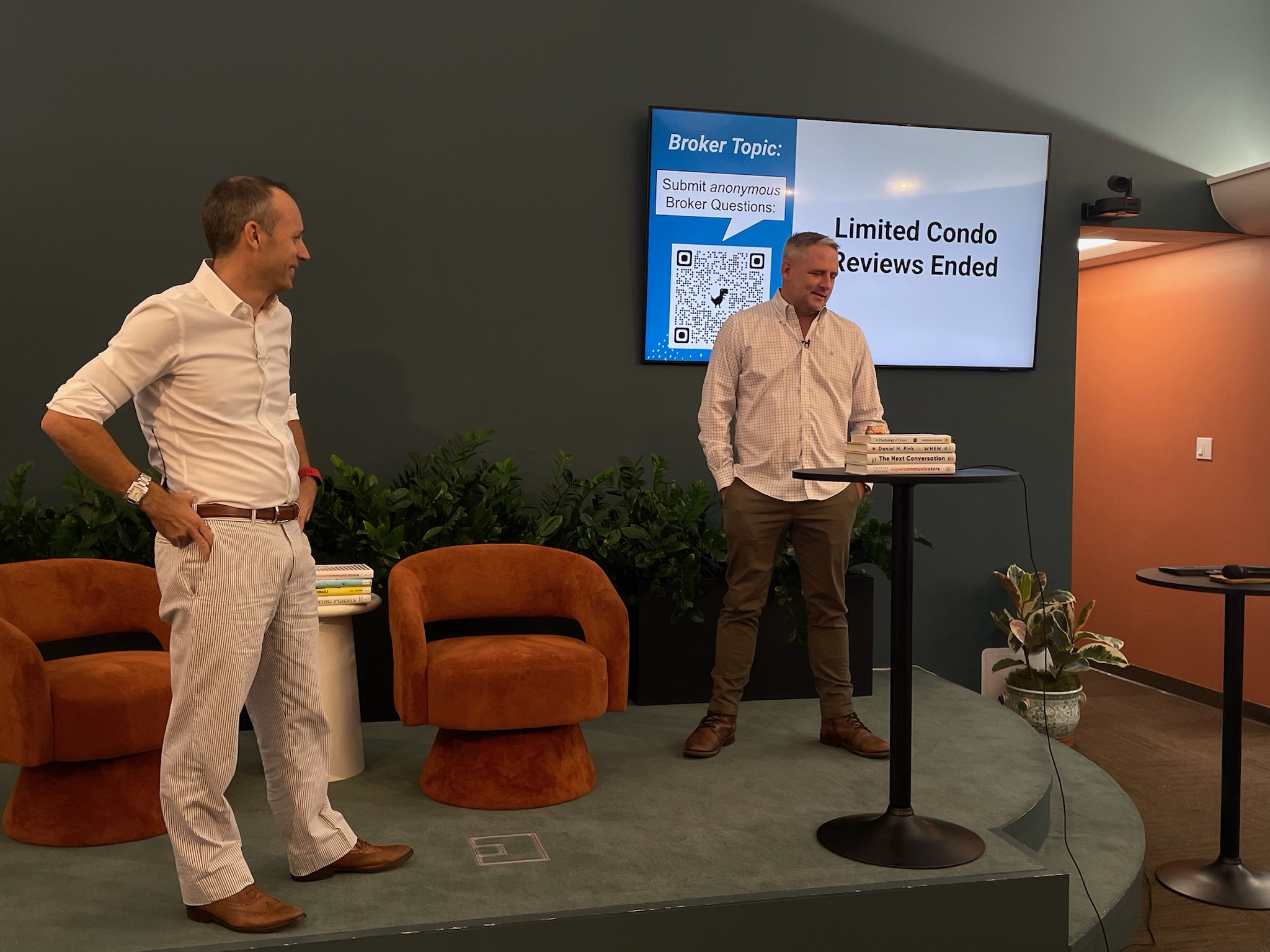
Cody Caudill and Jeffrey Doussan, Team Leader and Operating Principal of KW New Orleans, on tightening condo lending standards, what documents every buyer must request, and how to protect yourself when a special assessment is lurking.
Condo lending in New Orleans is getting stricter. Fannie Mae and Freddie Mac now require a full project review — covering association finances, insurance, reserves, and deferred maintenance — for most conventional condo loans, replacing the lighter-touch limited review that was once standard. For buyers, agents, and listing brokers alike, this means the condo document request is no longer optional diligence; it is the transaction.
Why It Matters
For years, buying a condo in New Orleans could feel deceptively simple: a streamlined mortgage review, a thin stack of association documents, and a closing. That window is closing. Lenders are moving the entire conventional condo market toward the same scrutiny that was once reserved only for high-risk buildings — and agents who haven’t updated their due-diligence habits are going to find deals collapsing at the finish line.
Cody Caudill, Team Leader at KW New Orleans, and Jeffrey Doussan, Operating Principal, spent part of a recent internal training session walking their agents through what the shift from limited to full condo review actually means in practice — and what every buyer’s agent, listing agent, and broker should be doing differently right now.
The State of Play
The shift away from limited condo reviews has been building since the 2021 Champlain Towers South collapse in Surfside, Florida exposed just how many homeowners associations across the country were operating with underfunded reserves and ignored structural warnings. Fannie Mae and Freddie Mac responded with updated condo project approval guidelines that tightened what lenders must verify before backing a loan on any unit in a multi-unit building.
1.- Limited review is fading out. The limited condo review — which historically required minimal documentation from the homeowners association — was retired by Fannie Mae Lender Letter LL-2026-03 for loan applications dated on or after August 3, 2026, making the full review the default for most conventional loans. Buyers and agents who assumed the old process would continue should plan for more documentation requests and longer timelines.
2.- Full review criteria are extensive. A full condo project review pulls apart the association’s financials, insurance coverage, reserve study, pending litigation, special assessments, and deferred maintenance — and several of these thresholds tightened for 2026. Insurance: the master policy must cover at least 100% of insurable replacement cost, and a per-unit deductible above $50,000 disqualifies the project (the roof is the one exception, which may still carry actual cash value coverage instead of replacement cost). Delinquency: if 15% or more of units are 60 or more days behind on assessments, the project is non-warrantable outright — a hard fail with no workaround. Structural issues: any unresolved critical structural repair, structural integrity remediation project, or municipal evacuation order takes a project off the table for conventional financing until it’s cleared. Ownership concentration: in projects of 21 units or more, no single entity — an investor, a developer, even the HOA itself — may hold more than 20% of units, a cap tightened down from a prior 50% ceiling. Any one of these findings can trigger a denial on its own; a New Orleans association that looks fine on the surface can still fail full review over a lapsed insurance certificate or an unresolved fire-escape citation.
3.- New Orleans has particular exposure. The city’s historic housing stock is dense with small conversions — two-unit buildings in the French Quarter, Uptown, and Mid-City where an old house was split into two condos, sometimes with minimal formal governance. These associations are especially likely to struggle with documentation requirements.
4.- Reserve funding now has a floor. Fannie Mae’s updated guidelines require associations to allocate at least 10% of their annual budget to reserves (rising to 15% for loan applications dated on or after January 4, 2027), unless a compliant reserve study demonstrates equivalent protection. Underfunded associations may face loan ineligibility, which directly affects what buyers can finance in those buildings.
“
“It’s surprising how many people don’t request that depth of documents.”
— Cody Caudill, Team Leader, KW New Orleans
The Document Request: Your First Line of Defense
The condo document request is where deals are won or lost, often before an inspection ever happens. The full package — declaration, bylaws, rules and regulations, current budget, most recent reserve study, proof of insurance, and at least two years of meeting minutes — tells a buyer nearly everything they need to know about whether the association is functional and financially healthy.
The meeting minutes are the piece most agents skip, and the piece that matters most. A special assessment — an additional charge levied on unit owners beyond regular dues to cover unexpected or deferred expenses — almost never appears without warning in those minutes. Discussions, votes, contractor bids, and debates about major repairs all get recorded there. If the minutes are thin, that itself is a signal: either the association isn’t meeting, or it isn’t keeping records. Neither is a comfortable place to be as a buyer.
Two-unit conversions present a particular governance challenge. When a historic New Orleans double is divided into two condos, the two owners effectively become a homeowners association of two. Every decision about the building — trimming a tree, splitting a repair, replacing a roof — requires agreement from both sides. That’s a partnership that can work beautifully or grind to a halt, and meeting minutes are the only record of which way it’s been going.
I think it’s crazy when people don’t ask for the minutes of meetings for the last two years.
— Jeffrey Doussan, Operating Principal, KW New Orleans
When You Hear a Rumor: Shifting the Liability
One of the more practical stretches of the conversation dealt with a scenario any listing agent can find themselves in: a tenant or neighbor mentions, offhand, that a special assessment might be in the works. The seller hasn’t said anything. You don’t know if the rumor is solid. What do you do?
Jeffrey Doussan’s answer is rooted in something closer to legal strategy than standard real estate practice. Information that stays only in the agent’s head stays as the agent’s liability. The moment you document that you heard something, asked about it, and received a response, you’ve moved the liability off your shoulders and onto the record. An email to the seller saying “I heard there might be an assessment coming — can you tell me if that’s accurate?” isn’t alarmist. It’s professional. And if the seller confirms an assessment is planned but refuses to disclose it, the agent’s obligation is clear: it goes in the disclosures.
The flip side is worth noting. Condo associations discuss dozens of potential expenditures at every meeting; the vast majority never materialize. Hearing a rumor doesn’t mean an assessment is imminent. What it means is that you need color from the person with actual knowledge — the seller — before you can give your client a complete picture.
Problems are not wine; they do not get better with age.
— Jeffrey Doussan, Operating Principal, KW New Orleans
Reserve Studies and What Higher Dues Actually Mean
A reserve study is an engineering and financial analysis that estimates the remaining useful life of a building’s major components — roof, elevator, HVAC, structural elements — and calculates how much money the association should be setting aside each year to cover those future replacements. Under the updated Fannie Mae guidelines, lenders now scrutinize whether an association has completed a current reserve study and is actually funding to the recommended level.
For buyers worried about rising condo fees, the framing matters. An association that has been underfunding its reserves isn’t saving its owners money; it’s deferring a larger bill. When that bill comes due — as a special assessment or an emergency loan — it tends to arrive all at once. A modest increase in monthly dues to fund a reserve properly is almost always cheaper than the alternative. Agents who can explain that math clearly will find it easier to help clients make confident decisions rather than anxious ones.
The same logic applies to buildings that haven’t run a reserve study at all. Lenders asking for one aren’t being obstructionist; they’re asking a question the association should already be able to answer. If it can’t, that’s useful information for a buyer to have before they sign. For agents working with buyers across New Orleans’ condo inventory, understanding what to look for in a condo listing is now as important as understanding the neighborhood.
Common Questions
The move from limited to full condo review isn’t a paperwork inconvenience — it’s a fundamental change in what lenders require agents and buyers to know before a deal closes. Cody Caudill and Jeffrey Doussan are telling their agents to request the complete document package on every condo transaction, read the meeting minutes for the last two years, and treat any rumor about a special assessment as something to document and verify in writing — not ignore. New Orleans’ inventory of small two-unit conversions is especially exposed, because many of those associations were never set up to produce the governance records lenders now expect. The agents who get ahead of this will protect their clients and close more deals; the ones who wait will be delivering bad news at the worst possible moment.
About this series. KW New Orleans hosts regular conversations with the leaders shaping our city — developers, architects, investors, and operators building the New Orleans of tomorrow. These are the conversations that happen in the rooms most people don’t get invited into.
KW New Orleans brings together the sharpest minds in real estate, development, and investment. If you’re ready to work alongside people who treat every deal as a reason to get smarter — we’d love to talk.