
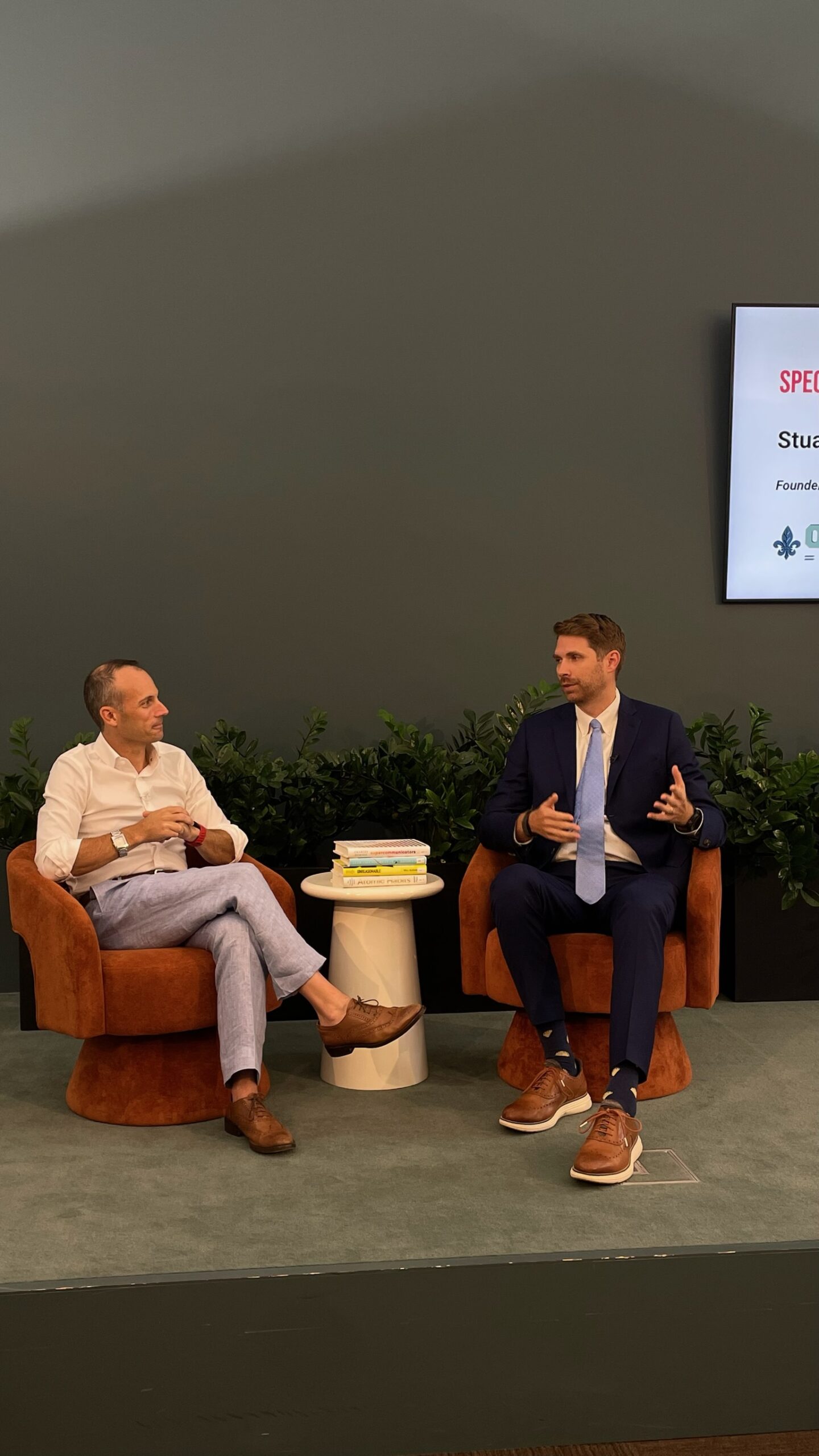
Stuart Pirri, Founder & CEO of Oak Title, on what’s inside a title commitment, what an out-of-state title company can miss under Louisiana’s civil law, and why the choice of title company can matter again years later, when the client sells.
In Louisiana, the buyer picks the closing agent: the Louisiana Real Estate Commission’s standard purchase agreement says the act of sale is executed before a settlement agent or notary chosen by the buyer, and federal law bars a seller from requiring a buyer with a federally related mortgage loan to buy title insurance from a particular title company. That choice decides who reviews the property’s 30-plus-year history and who stands behind the work if a missed lien, a defective donation, or an uncanceled mortgage turns up when the client sells. With Zillow and Rocket Mortgage each operating alongside an affiliated title company, who picks the title company, and why, is a conversation every agent should have with every client.
Why It Matters
The pitch from the big platforms is simple: get your leads through us, and close through our partners. What the pitch leaves out is what can happen years later, when your client goes to sell, the new title search turns up a lien or a defect the first title company missed, and fixing it means waiting on an out-of-state post-closing department instead of calling someone across town.
That’s the conversation KW New Orleans Operating Principal Jeffrey Doussan brought to the floor at the September 2, 2026 team meeting, pulling in title attorney Stuart Pirri to walk agents through what happens inside a title file, where Louisiana’s civil law creates risks an out-of-state title company can miss, and what the growth of Zillow’s mortgage business means for agents who depend on its lead flow.
The State of Play
The business models of the big real estate platforms are shifting fast, and title is the part of the transaction most agents (and nearly every buyer) think about last. Here’s what has changed and why it matters.
The issues don’t arise until your client goes to sell the property. Let’s see what did the title company actually miss.
Stuart Pirri, Founder & CEO, Oak Title
What’s Actually in a Title Commitment
Pirri estimates that 99% of buyers never open the title commitment. That should worry any agent, because the commitment is the clearest picture of what a buyer is getting, and of what the title policy won’t protect them against.
A title commitment is the pre-closing document that lays out what the title insurance policy will cover and what it won’t. Before issuing one, Pirri or his team reviews a 30-plus-year abstract of the property (tax records, mortgage records, conveyance records) and checks that everyone who needed to sign a prior act did, including on successions and donations. Two sections matter most. Exceptions are items the policy will not cover, often a physical condition such as a fence that a prior survey showed sitting slightly off the property line. Requirements are what has to happen before closing: paying off the seller’s existing mortgage, clearing a credit card judgment, or having the notary who passed a defective act of donation execute an act of correction.
In New Orleans, the most common exception Pirri sees involves fences and gates that have stood for decades and sit a little off the property line. The exception tells the buyer that if they later tear the fence down and end up in a dispute over where it belongs, the title insurer probably won’t want to touch it. That’s the moment to ask how big the encroachment is and whether a new survey makes sense, before closing rather than after a neighbor objects.
Pirri’s recommendation is simple. Agents are copied on the email when the title commitment goes out, so pick up the phone: ask whether the buyer has read it, and offer to get someone from the title company on a call to walk through it. Pirri said a buyer asks for that walkthrough maybe once every three months; otherwise, it’s crickets. A short call before closing can head off the post-closing fence call he hears far more often. If you’re working with buyers in Uptown, the Garden District, or the Marigny, where many fences and gates have stood for decades, that review matters even more.
A lot of people, I’d say, 99% of people don’t even open that document.
Stuart Pirri, Founder & CEO, Oak Title
Louisiana’s Civil Law Rules: What Out-of-State Title Companies Can Miss
Louisiana’s property law comes from a civil law tradition rooted in French and Spanish law, while the other 49 states build on English common law. That difference shows up in title work, in requirements an examiner used to common-law forms may not be looking for.
The biggest problem Pirri has had to go back and fix involves donations, the Louisiana act for giving property as a gift. A donation must be made by authentic act (La. Civ. Code art. 1541), meaning it is signed before a notary and two witnesses (art. 1833), and it has no effect until the donee accepts it, either in the act of donation or later in writing while the donor is alive (art. 1544). Pirri said the act needs language stating that the donee appeared to accept the property; in his experience, the donee’s signature alone isn’t treated as enough. When a prior title company assumed the acceptance and missed the gap, the problem surfaces when the owner goes to sell. In one case he described, the earlier policy had been written through an underwriter his office knew, and that underwriter agreed to let the sale go forward and handle the fix on the back end.
The second issue is missed liens. Pirri described a sale where his office found an IRS tax lien against a former owner that the previous title company had missed. Getting answers from the IRS is hard when that person is no longer part of the transaction, and the closing had to be pushed back 90 days. The old title company’s response was that the owner had title insurance. Pirri’s office tracked down the former owner, who saw no reason to pay a lien on a property he had already sold. What saved the deal: the seller had an owner’s policy, so Fidelity National Title cut a check for $45,000 at closing to pay the IRS.
That story is Pirri’s case for buying an owner’s title policy in addition to the lender’s policy. He pointed to First American, Fidelity, and Stewart Title, three of the largest national title underwriters. In his experience, they are easier to collect from than homeowners insurers, but they make their own risk calls: if the IRS isn’t asking questions, an underwriter may simply insure over a lien and let the deal close, which Pirri called “a little terrifying when you think about it.”
When Things Go Wrong at the Table: Why Local Relationships Matter
Remote closings work fine when everything lines up, Pirri said. Something usually comes up, though, and what matters then is how fast someone can fix it.
Pirri’s office handled a closing where the borrower’s name was misspelled on every document in the loan package. At a local title company, that means a call to the lender and corrected documents printed in the office. When a platform sends a hired mobile notary to the client’s house instead, Pirri said, the notary isn’t working for the platform: the request has to go back to the lender and through underwriting, and it can pass through about four different people before anyone prints new documents. That can mean a delay.
The same goes for escrow holdbacks, agreements that set aside part of the closing funds to cover a repair or other issue found at the final walkthrough. Because Oak Title also acts as the escrow company, Pirri said, a holdback agreement can be done at the table; his office has done them within 15 minutes when all parties agree. It gets more complicated when the agreement has to go to an out-of-state company, where the person you talked to yesterday may not be the person on the file today. On a tight timeline, such as a three-week close where the title work takes the first week, waiting a week or two on another company can put a rate lock, or a purchase contingent on the sale of another home, at risk.
Local title companies also lean on each other. Pirri said his office talks with the other high-volume local title companies at least once a week. When one of them finds a mortgage on a property that still looks uncanceled, a phone call can settle it: Oak Title sends proof of the payoff and follows up with the lender to get the cancellation. Those companies also call each other to check signatures and verify identities, and Pirri said the favors run both ways. Ask your KW New Orleans agent which title companies they trust, and why.
Whoever makes you look good and does a good job, and you’ve worked with for years, why change that?
Stuart Pirri, Founder & CEO, Oak Title
What Agents Should Actually Do
The goal here is to make sure clients understand what they’re choosing before they choose it, whichever platform they end up using.
Pirri’s advice: if a title company has done right by you for years, and fixed things when there was a bump in the road, there’s little reason to change. The real test is the closing that goes sideways and how the company handles it. Doussan added that the habit of giving clients three vendor options isn’t required by any law he knows of. For a newer agent building a vendor list, one or two strong, tested relationships you can explain to a client are worth more than a padded list of three.
Some clients will want to use a Zillow- or Rocket-affiliated title company, especially if there’s an incentive on the table; Doussan said a client may be offered something like $500 off. If the client is comfortable and the process is smooth, Pirri said, that’s their call. Just lay out what can go differently: a delay if a document needs fixing at closing, a file that changes hands between calls, a final-walkthrough holdback that takes longer to arrange. “As long as you disclose all that and they’re still comfortable with it, I think you’re in line,” Pirri said. Louisiana law requires an agent representing a client to promote the client’s best interests (La. R.S. 9:3893), and that conversation is part of it.
One more flag, this one for buyer’s agents: when listing comments say the seller must close with a specific title company, pay attention. The Louisiana Real Estate Commission’s Residential Agreement to Buy or Sell provides that the act of sale is executed before a settlement agent or notary chosen by the buyer. Federal law adds a separate protection: when the buyer is using a federally related mortgage loan, Section 9 of RESPA bars the seller from requiring, directly or indirectly, as a condition of the sale, that the buyer purchase title insurance from a particular title company, and a seller who does is liable to the buyer for three times all charges made for that title insurance (12 U.S.C. 2608). Doussan reads that listing language as a red flag that the listing side may have a financial tie to the title company, and that’s information your buyer deserves to know. If you spot it while you search current listings, talk it over with your broker before you advise a client to agree to it.
And if title work was already done on a prior contract that fell through, that alone isn’t a reason to accept the other side’s title company. Pirri said title companies will buy title work from each other: your client’s chosen company can call, buy the existing abstract, and pick up the file, and the first company still gets paid for the work it did.
Common Questions
Stuart Pirri’s argument came down to one idea: title companies are not interchangeable, and in Louisiana that’s especially true. Donation and acceptance rules, a 30-plus-year abstract review, and local title companies that call each other to clear problems all favor a company that knows the territory. Doussan’s view is that Zillow’s mortgage growth reflects agent lead flow being tied to sending it business. Agents who can explain those trade-offs clearly (to buyers, to sellers, and to themselves) are the ones who keep the client relationship. The practical question is simple: when something breaks at the table, do you have a cell phone number for someone who can fix it in 15 minutes, or a ticket number in a queue?
About this series. KW New Orleans hosts regular conversations with the leaders shaping our city: developers, architects, investors, and operators building the New Orleans of tomorrow. These are the conversations that happen in the rooms most people don’t get invited into.
KW New Orleans brings together the sharpest minds in real estate, development, and hospitality. If you’re ready to work alongside people building the city’s future, we’d love to talk.