
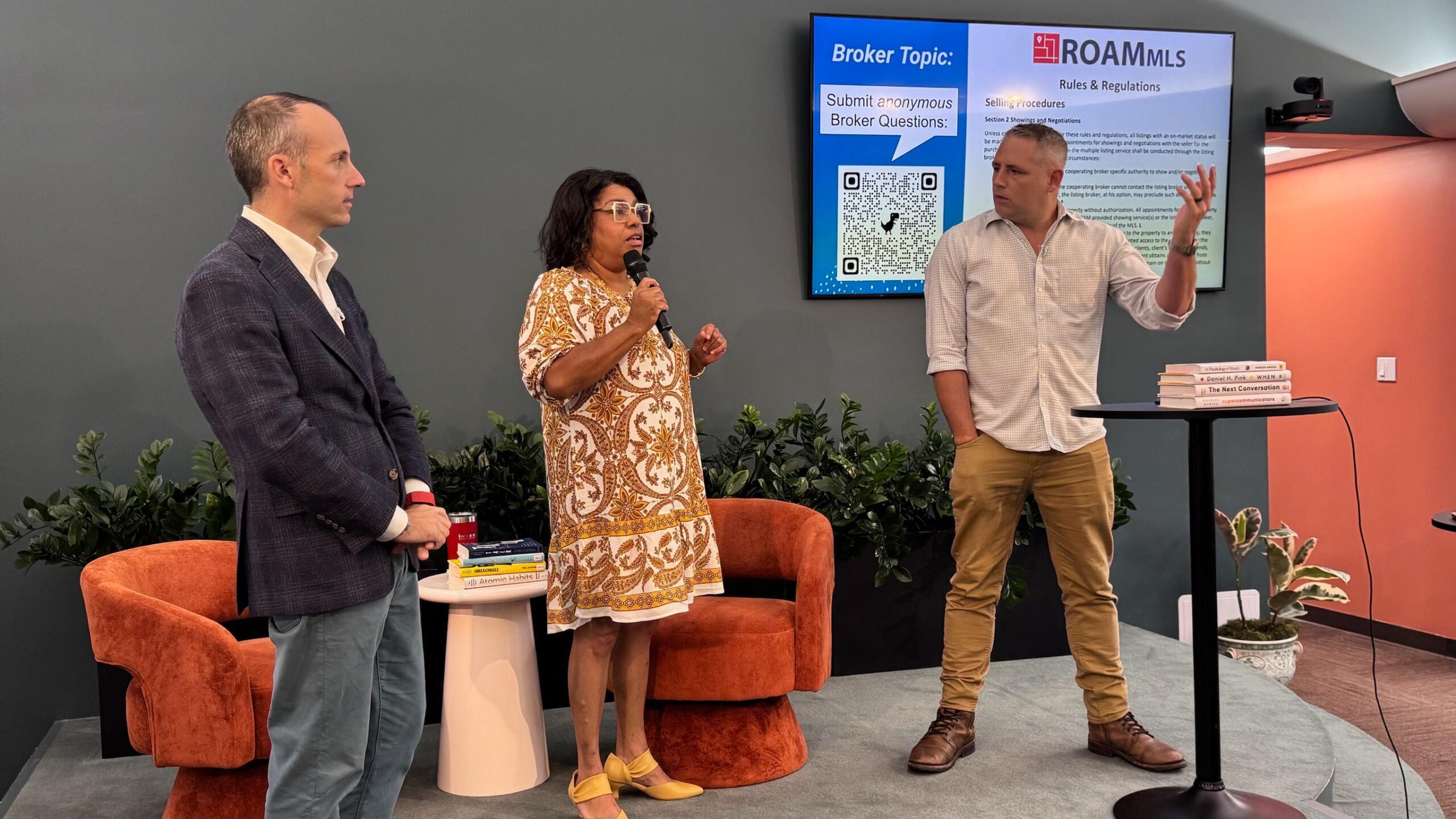
Nichole Donald, Coach and Co-Broker, and Jeffrey Doussan, Operating Principal at KW New Orleans, on seller authorization, third-party property access, and what NOMAR compliance actually requires of listing agents.
Under ROAM MLS rules, which cover New Orleans Metropolitan Association of REALTORS® (NOMAR) members, any licensed agent who lets a third party into a listing (an inspector, appraiser, contractor, or even a client’s family) must stay on site while that person is there. The one exception: the listing agent gets the seller’s authorization for unaccompanied access. KW New Orleans asks its agents to get that authorization in writing before the visit. The rule is not new (it has been in the ROAM rules since at least February 2024), but according to Nichole Donald, KW New Orleans Coach and Co-Broker, NOMAR is seeing a rise in complaints about it.
Why It Matters
Real estate agents work fast, calendars are tight, and inspections happen constantly. So when a rule that has been on the books for years starts generating complaints, agents need to know exactly what it requires and where they are getting it wrong. The stakes are concrete: ROAM’s current fine schedule (May 2026) lists a licensed agent who is not on site with a third party as a severe violation carrying a $500 fine.
At the September 9, 2026 KW New Orleans leadership roundtable, Nichole Donald (Coach and Co-Broker) walked agents through the third-party property access rule while Jeffrey Doussan (Operating Principal), Cody Caudill (Team Leader), and Holly Freas (Market Center Administrator) worked through the edge cases with her: who it applies to, who it doesn’t, and what a listing agent needs to do to stay compliant. Some of the answers surprised agents who assumed existing contract language covered them.
The State of Play
The rule lives in Section 2(d) of the ROAM MLS Rules & Regulations, and it was already there in the February 2024 version. In plain terms: once a licensed agent grants a third party access to a listing, that agent must stay on site for as long as the third party is on the premises, unless the listing agent has the seller’s authorization for the third party to be there alone. The REALTOR® Code of Ethics, which NOMAR enforces for its members, points the same way: Standards of Practice 1-16 and 3-9 bar REALTORS® on either side of a deal from accessing a property, or letting others access it, on terms other than those the owner or seller set. According to Donald, NOMAR has seen an uptick in complaints tied to third-party access, a sign that agents are either unaware of the rule or underestimating what it covers.
You have to have authorization from your seller to allow for a third party to be there, without you present.
Nichole Donald, Coach & Co-Broker, KW New Orleans
Who Does and Doesn’t Qualify
This is where the conversation got specific, and where several assumptions held by experienced agents turned out to be wrong. Jeffrey Doussan and others in the room pressed Donald on a series of common workarounds, and her answers, which reflect how KW New Orleans applies the rule, were consistent: most of them don’t hold up.
An unlicensed assistant? No. The ROAM rule puts the duty on a licensed participant or subscriber, and the Louisiana Real Estate Commission’s guidance on unlicensed assistants says they may not show listed property. Another agent from the same office who isn’t on the transaction? No. A family member? No. The buyer’s agent is covered (they are a party to the transaction), but under KW New Orleans guidance, anyone else who is not part of the deal does not satisfy the requirement simply by being licensed or affiliated with the brokerage.
The appraiser question came up because some appraisers also hold real estate licenses. Donald was clear: holding a license does not make someone a party to the transaction. An appraiser is a third party regardless of credentials, and their presence in the home without a licensed agent present requires the same seller authorization as any inspector or contractor.
Surveyors add another wrinkle. They usually work outside, and as Doussan put it, they never want the agent there. Holly Freas, Market Center Administrator, answered that even with a surveyor out on the grounds, somebody should still be there, and the ROAM rule’s wording points the same way: it applies for as long as a third party is “on the premises,” not just inside the house.
Would you want someone coming into your home without no one being present? I know I don’t want no one coming into my home without someone being present, and as the agent, it is your responsibility to protect your sellers. So you should not be letting anybody in your seller’s home and leaving.
Holly Freas, Market Center Administrator, KW New Orleans
The Written Authorization Path
So what does an agent actually do when they cannot be present? The KW New Orleans answer is straightforward: get the seller’s authorization in writing before the visit happens.
Donald confirmed that a signed authorization from the seller, allowing a third party to be on the property without a licensed agent present, satisfies the requirement. That tracks the ROAM exception, which lets a listing agent allow third parties to stay on the premises alone once the seller or responsible party has authorized it. At the September 9 meeting, leadership said a standard KW New Orleans seller authorization form was on the way; agents should check with the office for the current version and, either way, document the seller’s consent before access is granted.
The practical sequence is simple: contact the seller, explain who is coming and when, get written sign-off, then provide access. It takes a few minutes, and it is far easier than answering a NOMAR complaint after the fact. When David Ernst described his own plan (open the house for an inspector, then leave rather than sit through a three-hour inspection), Donald’s answer was that it works only if the seller has signed the authorization first.
Agents who want to build tighter compliance habits can find additional resources and connect with the KW New Orleans team through the Learning Center.
Business Model, Value, and the Bigger Picture
The discussion didn’t stay purely procedural. At one point, a question surfaced about whether being present at inspections should be a non-negotiable part of buyer representation, and Doussan pushed back on the idea of prescribing one answer for everyone.
Everybody gets to pick the way they present their value proposition and what their value proposition is, and that’s the fun part. … I think different business models work for different types of real estate and different kind of clients.
Jeffrey Doussan, Operating Principal, KW New Orleans
His point was that different business models serve different clients, and KW New Orleans operates as a platform for entrepreneurs who define their own value propositions. Whether an agent chooses to be present at every inspection as part of their service offering is a business decision. Getting the seller’s authorization before leaving a third party alone in a listing is required either way.
The distinction matters. Agents curious about how compliance and a flexible, entrepreneurial practice can coexist are encouraged to connect with the KW New Orleans team directly.
Common Questions
Some agents have been opening listing doors for appraisers, inspectors, and contractors and walking away, assuming a third party’s license or the contract’s inspection period covers the visit. Under ROAM MLS rules, it does not, and according to Donald, NOMAR complaints are climbing as a result. The fix is specific: the agent who opens the door stays on site, or the listing agent gets the seller’s authorization before the visit (in writing, under KW New Orleans guidance). An unlicensed assistant won’t satisfy it. Another agent from the office who isn’t on the deal won’t satisfy it. A third party’s real estate license won’t satisfy it. Agents who build this habit now won’t be learning the rule for the first time inside a complaint process.
About this series. KW New Orleans hosts regular conversations with the leaders shaping our city: developers, architects, investors, and operators building the New Orleans of tomorrow. These are the conversations that happen in the rooms most people don’t get invited into.
KW New Orleans brings together the sharpest minds in real estate, development, and hospitality. If you’re ready to work alongside people building the city’s future, we’d love to talk.