
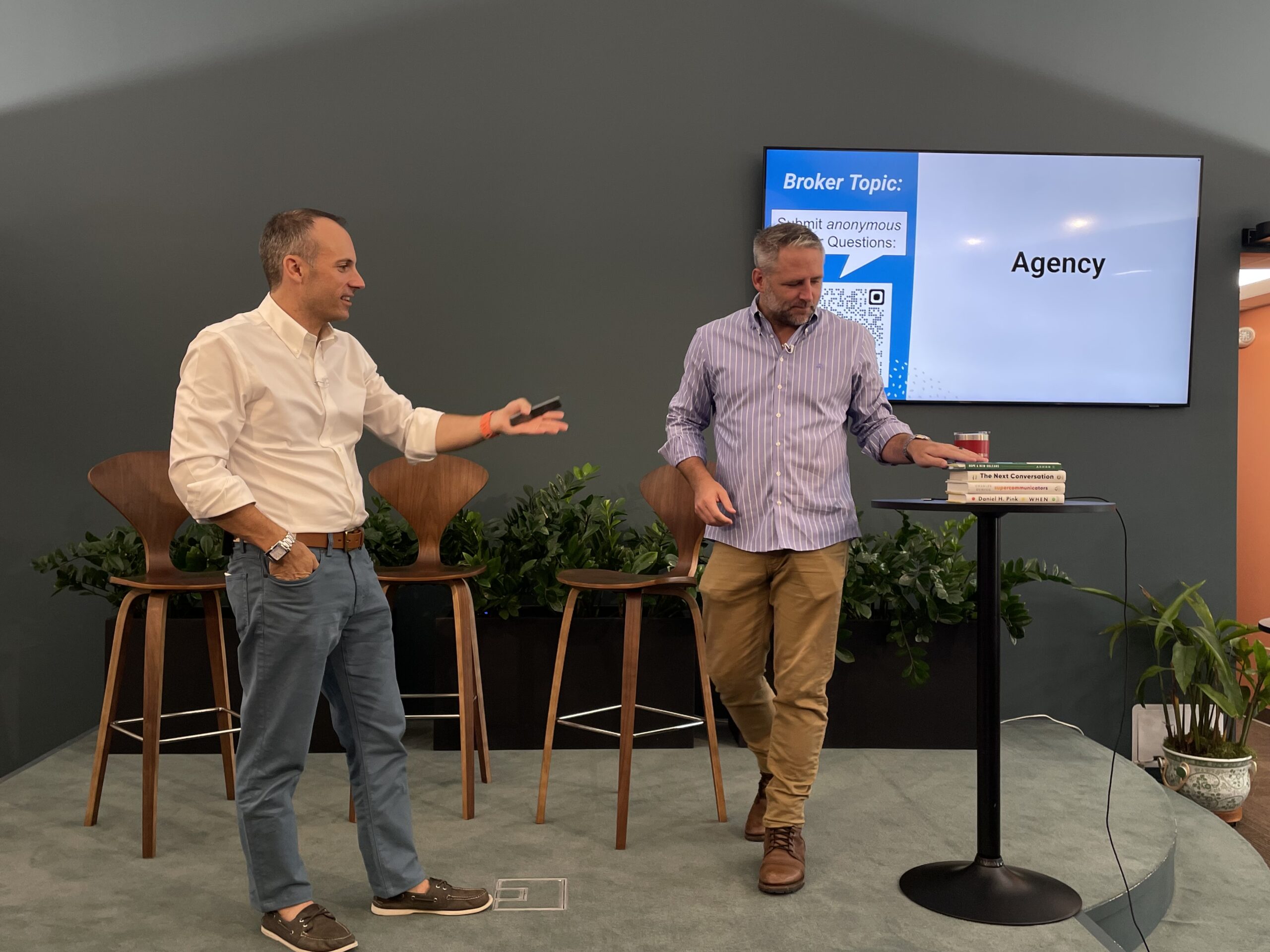
Cody Caudill and Jeffrey Doussan on why agency disclosure is a missed opportunity for every agent, and how treating it like a professional engagement letter changes everything.
Louisiana requires written agency disclosure no later than the point of “substantive contact”: when an agent first solicits or receives a client’s confidential financial information, motives, or objectives. Cody Caudill and Jeffrey Doussan of KW New Orleans argue agents should stop treating that requirement as paperwork and deliver it like a professional engagement letter, the way attorneys and CPAs open every client relationship, because the disclosure moment is where trust is either built or lost.
Why It Matters
Most agents treat the agency disclosure like a speed bump, something to clear before the real work starts. Slide it across the table, get the signature, move on. But that framing, Cody Caudill and Jeffrey Doussan argue, is exactly what’s costing agents the trust they need most at the beginning of a client relationship.
The agency disclosure requirement in Louisiana isn’t new. What’s new is the conversation around how agents present it. Caudill and Doussan, Team Leader and Operating Principal at KW New Orleans, turned their on-air back-and-forth into a sharp argument: stop treating disclosure like a legal obligation you’re dragging clients through, and start treating it like the engagement letter every other professional sends before they give a single piece of advice.
The State of Play
Agency disclosure sits at the foundation of every real estate relationship in Louisiana, but the gap between what the law requires and how agents actually execute it is wide. Here’s where things stand.
I think some of the problem is we treat it like such a burden and like a forceful event that we fight it, and our clients almost see the rub.
Cody Caudill, Team Leader, KW New Orleans
The Engagement Letter Argument
Doussan’s point cuts cleanly: every professional you hire sends something at the start of the relationship. The lawyer sends a retainer letter. The CPA sends an engagement agreement. The financial advisor sends a disclosure packet before the first recommendation. They all say, in effect: here’s who I am, here’s what I’ll do, here’s what this costs, here’s how we work together.
Real estate agents have that same opportunity with agency disclosure, and most leave it on the table. The Louisiana Real Estate Commission sets an outer deadline on the disclosure: no later than the point of “substantive contact,” when an agent first solicits or receives a client’s confidential financial information, motives, or objectives. What the Commission does not dictate is tone, format, or how much earlier than that deadline an agent chooses to deliver it. That earlier, more intentional delivery is entirely the agent’s call. And that discretion is where professionalism lives or dies. Agents who want to sharpen their approach can find resources through the Louisiana Real Estate Commission, including guidance on disclosure timing and requirements.
The agents Caudill and Doussan admire most don’t hand over a form. They walk a client through a brief, clear explanation of what the agent’s role is, what fiduciary duties apply, how compensation works, and what the client can expect. That’s not more work. It’s the same information, delivered with intention. For a deeper look at how top agents in New Orleans build lasting client relationships, the principles start exactly here.
Every professional I engage or do business with sends a letter or sends something at the beginning of the relationship saying here’s what’s gonna cost, here’s what’s gonna look like, here’s how I bill you, all these things. Why are we not thinking that way?
Jeffrey Doussan, Operating Principal, KW New Orleans
Timing Is the Whole Game
Buried in the conversation is the detail agents most commonly get wrong: the when. Doussan is direct about it: agency disclosure has to happen at or before substantive contact, before a client’s financial details or motives come up, before advice gets given. Not when you’re writing the offer. Not after you’ve toured three houses together.
The habit of delaying disclosure until the transaction is underway is both a legal vulnerability and a relationship problem. By that point, the client has already received guidance, formed impressions, and made decisions, all without a clear understanding of whose interests the agent is representing. Getting this sequence right is one of the most practical things an agent can do to protect their clients and themselves. Agents building out their professional systems can also explore what it looks like to grow inside a brokerage that takes these standards seriously.
The fix isn’t complicated. It’s a mindset shift as much as a procedural one: disclose first, advise second. Make it feel like the natural opening move of a professional relationship, not a form you’re apologizing for handing over.
Not anything non-public or real estate advice, without an agency disclosure.
Cody Caudill & Jeffrey Doussan, KW New Orleans
What This Looks Like in Practice
The gap between a template form and a well-delivered disclosure isn’t wide, but it’s meaningful. Caudill imagines it as the difference between handing someone a government document and sending them the kind of introductory letter a good attorney would write: clear, warm, specific about what you’re going to do and what you’re going to get paid.
That reframe has downstream effects. Clients who understand the agency relationship from the start ask better questions, set clearer expectations, and are less likely to be confused or frustrated later when compensation conversations come up. Those are exactly the kinds of conversations that have grown more charged since the NAR settlement changed how buyer’s agent compensation is disclosed and negotiated across the country. Agents looking to sharpen their buyer consultation approach will find the the KW New Orleans Learning Center a useful reference point for how these conversations can be structured.
The agents who get this right aren’t doing more paperwork. They’re doing the same paperwork, with a different posture. And that posture, Caudill and Doussan both suggest, is what clients remember long after the closing.
Common Questions
Caudill and Doussan aren’t arguing for a new form or a new regulation. They’re arguing that the agency disclosure already in every agent’s folder is being systematically underused. Deliver it before you give advice, not alongside the offer. Frame it the way an attorney frames an engagement letter: here’s what I do, here’s what you can expect, here’s how I get paid. That sequence, done consistently, builds the kind of trust that carries through a transaction and into the next referral. The agents who get there first stop apologizing for the form and start owning it.
About this series. KW New Orleans hosts regular conversations with the leaders shaping our city: developers, architects, investors, and operators building the New Orleans of tomorrow. These are the conversations that happen in the rooms most people don’t get invited into.
KW New Orleans brings together the sharpest minds in real estate, development, and hospitality. If you’re ready to work alongside people building the city’s future, we’d love to talk.