
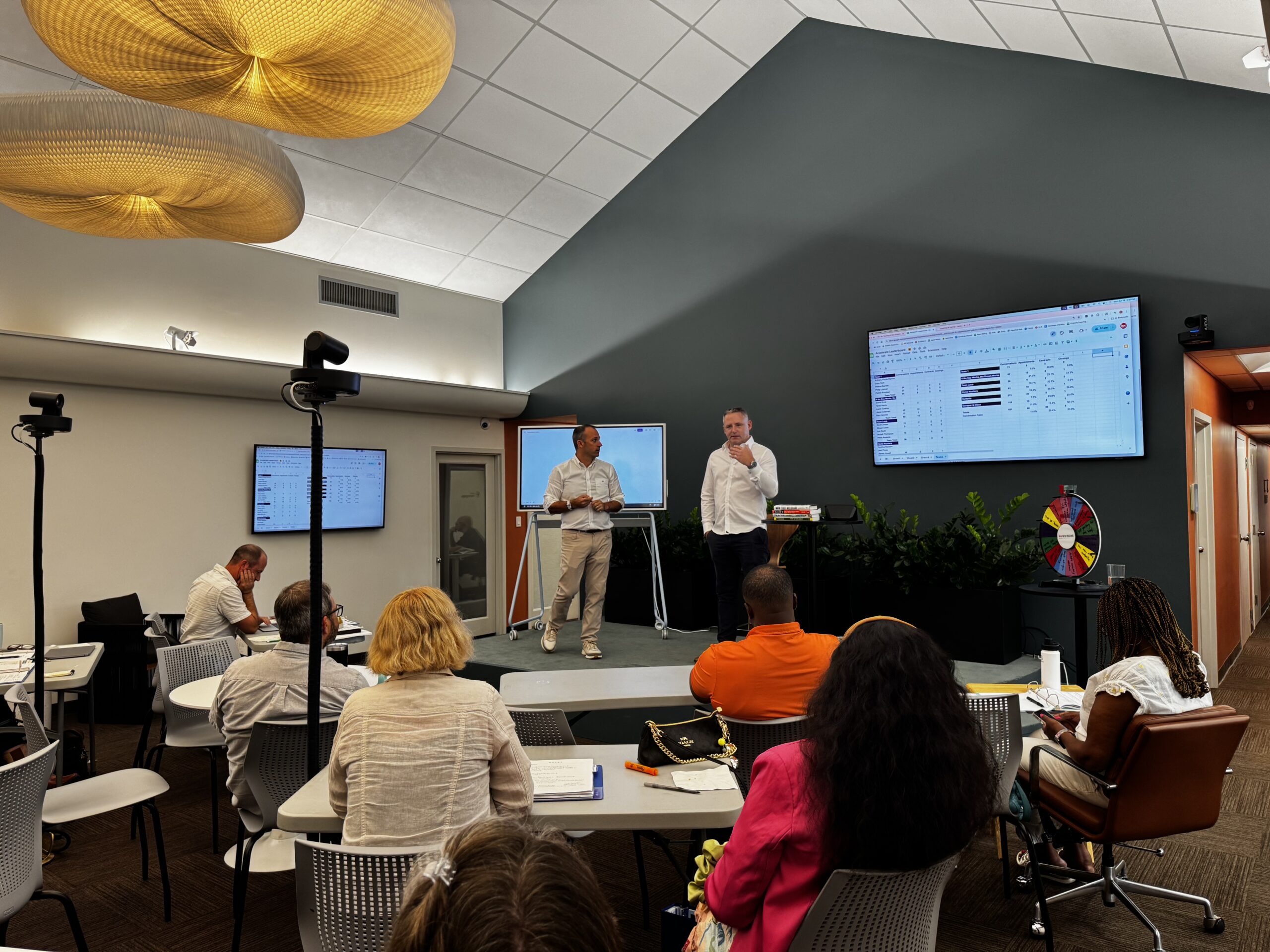
The KW New Orleans leadership team on what belongs in agent remarks, what belongs in public remarks, and what one wrong sentence can cost you at the closing table.
A single line in the agent remarks section of an MLS listing can unravel months of work. It can trigger a lender-required structural inspection, flag a property to an underwriter, or quietly disclose something that was never meant to be disclosed publicly, and never should have been written down by an agent at all.
This is not a theoretical risk. During a recent KW New Orleans broker session, Cody Caudill, Jeffrey Doussan, and Nichole Donald walked agents through real scenarios where careless or well-intentioned remarks created serious problems, from deals falling apart at underwriting to agents inadvertently practicing outside their license. The conversation is a masterclass in a topic most agents treat as an afterthought.
Agent remarks are not a private journal. Lenders, underwriters, and Fannie Mae guidelines can all be triggered by language that agents assume will only ever be read by another licensee. Here’s what the KW New Orleans leadership team flagged as the most pressing issues.
The most instructive moment in the session came from a real transaction where an agent referenced a structural engineering document inside the agent remarks field. The intent was to be transparent. The result was that an underwriter flagged the document at the tail end of the deal, stalling a closing that had been on track. Transparency is not the problem; placement and language are.
The distinction the leadership team draws is clear: agent remarks exist for logistical, agent-to-agent communication. Phone numbers, showing instructions, access codes. If information rises to the level of a material disclosure, it belongs in the public remarks or in the formal disclosure documents, not tucked into a field that agents might assume flies under the radar.
You don’t want to be only disclosing things to agents. If it’s disclose something you need to disclose, put it, say it in public.
Jeffrey Doussan, Operating Principal, KW New Orleans
One agent in the session shared a scenario that illustrated the stakes clearly: a condo listing went under contract, and the buyer’s lender declined to approve the association because of a structural damage assessment against it. The property was effectively a cash-only or non-traditional financing deal, and buyers arriving with FHA, VA, or standard conventional loans were wasting everyone’s time.
The solution the group landed on was putting “non-warrantable condo” language directly in the agent remarks, so buyer’s agents could filter before showing. The group also noted that some lenders can still warrant condos that fall outside traditional guidelines, which means the conversation with the buyer’s agent doesn’t have to end at the remarks field. It’s a starting point, not a verdict.
If their client has special financing, that agent needs to know. I can’t show them this.
Session Participant, KW New Orleans
Once you strip out everything that doesn’t belong, what’s left? The KW New Orleans team kept it simple: call me at this number, 24-hour notice required, proof of funds. Logistical details that help a buyer’s agent prepare for a showing without creating any exposure for the listing agent or their client.
The temptation to over-communicate in remarks usually comes from a good place: agents want to save everyone time and avoid bad-fit showings. But the discipline required is to ask one question before typing anything: does this belong in a public-facing disclosure, or is this purely a coordination detail? If it’s the former, it goes in the formal documents. If it’s the latter, it goes in agent remarks. If it’s neither (if it’s an opinion or an amateur diagnosis), it doesn’t get written down at all.
Words in MLS remarks fields carry real consequences: a structural note triggers a lender condition, a non-warrantable condo goes undisclosed and blows up at underwriting, a sheetrock description crosses into unlicensed expert opinion. The KW New Orleans leadership team is drawing a hard line: agent remarks are for logistics, public remarks and disclosure documents are for material facts, and anything that requires a license you don’t hold should never be typed at all. Get those boundaries right, and you protect your clients, your deals, and your license.
About this series. KW New Orleans hosts regular conversations with the leaders shaping our city: developers, architects, investors, and operators building the New Orleans of tomorrow. These are the conversations that happen in the rooms most people don’t get invited into.
Be in the Room Where It Happens
KW New Orleans brings together the sharpest minds in real estate, development, and hospitality. If you’re ready to work alongside people building the city’s future, we’d love to talk.