
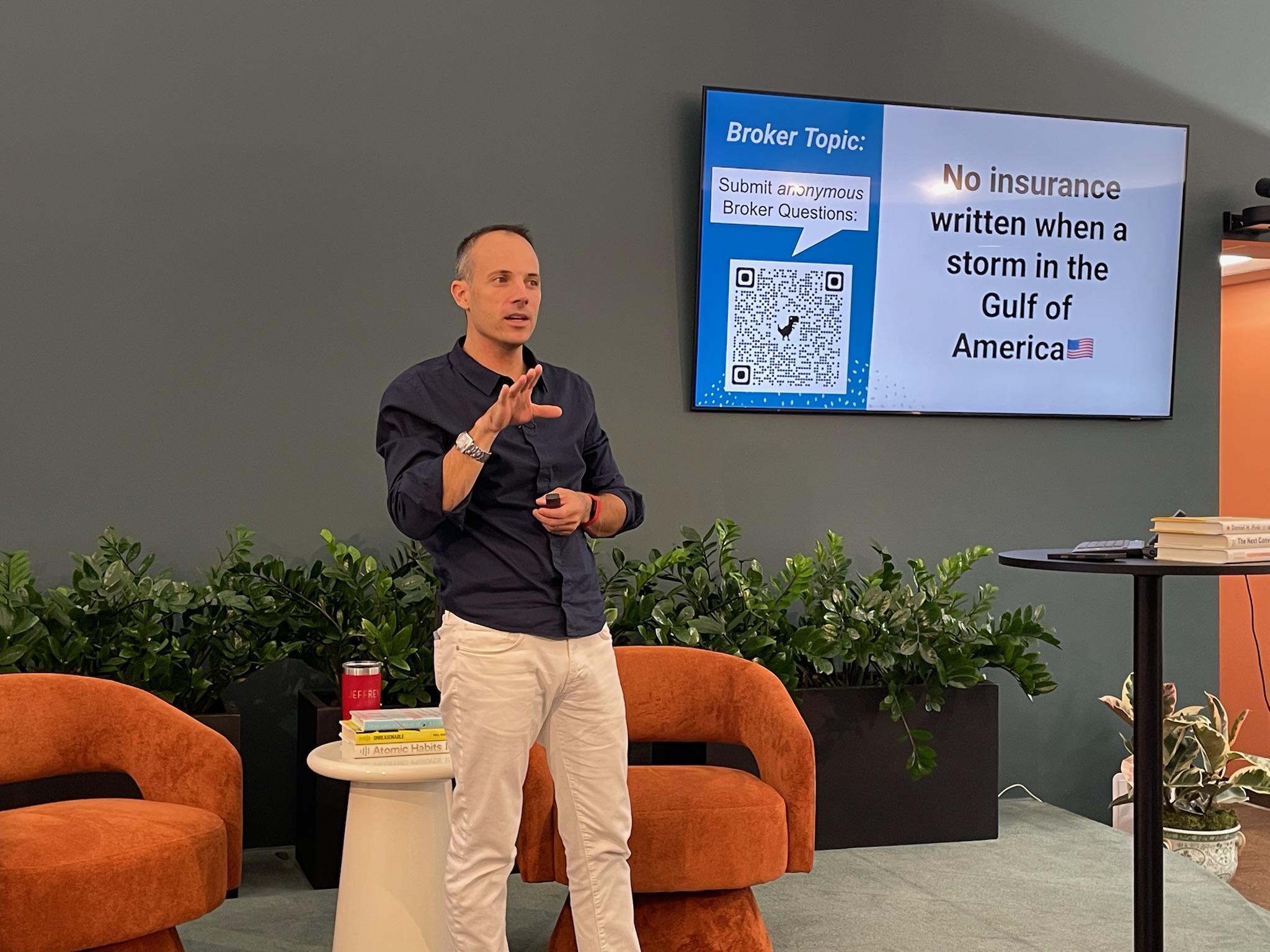
Jeffrey Doussan, Operating Principal of KW New Orleans, on why insurance binding goes dark before anyone expects it, how to use the force majeure addendum every time, and the hidden danger of a large earnest money deposit.
When a tropical system enters the Gulf of Mexico, insurers can stop binding new homeowners policies at any time, without notice, without a named storm, and without any uniform industry rule governing the decision. In Louisiana, the Louisiana REALTORS® Hurricane/Force Majeure Addendum is the primary contractual tool agents use to protect a closing from collapsing when insurance cannot be bound in time. Using that addendum on every transaction, and attaching it to MLS listings before an offer ever arrives, is the standard of care during hurricane season.
Why It Matters
New Orleans agents do not have the luxury of treating hurricane season as a background condition. It is an operational variable that sits inside every transaction from June through November, and the moment it creates a problem is rarely the moment anyone predicted. A system that spent the weekend spinning in the Gulf (unnamed, untracked by most buyers and sellers) can freeze an insurer’s binding authority before the morning standup call.
Jeffrey Doussan, Operating Principal of KW New Orleans, took a few minutes before a team meeting in July 2026 to walk through the mechanics of what actually happens when a storm threat disrupts a closing, what the force majeure addendum does and does not do, and why sizing an earnest money deposit is a risk calculation, not a formula. His co-broker, Nicole, was at a Louisiana REALTORS® meeting; Doussan ran the session solo, which meant the conversation moved quickly and without ceremony.
The State of Play
Gulf storm season in New Orleans is not a pause on real estate activity. Buyers are still under contract, lenders are still running timelines, and sellers are still expecting to close. What changes, often without warning, is the insurance market’s willingness to bind new policies. Here is where agents actually get tripped up.
Every deal is different, and I can’t stress this enough. Every deal is different.
Jeffrey Doussan, Operating Principal, KW New Orleans
The Force Majeure Addendum: Use It Every Time
The Louisiana REALTORS® Hurricane/Force Majeure Addendum is a contract form that allows both parties to extend a closing deadline when an act of God prevents the transaction from proceeding on schedule. It is not limited to named storms; it covers any qualifying act of God, which gives it broader utility than its name suggests. Holly Freas, one of the agents in the room, made that point plainly: “Remember that covers any act of God, so it’s just about being prepared for anything that may occur.”
Doussan’s protocol is direct: listing agents should fill out the addendum partially, have the seller sign their portion, and attach it to the MLS listing as part of the standard package. That way, when an offer arrives, the form is already in play and the buyer’s agent simply returns it completed. On the buy side, agents should include a completed addendum with every offer during hurricane season, not after the problem appears, but before it has any chance to.
The question of how long to set the extension window came up from agent Lori Scott, and Doussan was candid that there is no consensus answer. His current thinking: a 15-day extension is a reasonable baseline for most deals. In earlier years he used 45-day windows on both sides, reasoning that a major storm or a COVID-era scenario could keep people from a closing table for weeks. Today he leans shorter, with the acknowledgment that hurricane season calls for more cushion. The only real rule is that no line should be left blank.
All that seller has to do if things get nasty is just tie you up and refuse to sign the cancellation, and then they have $80,000 to $100,000 stuck in a criminal process or a civil process for you know a year until they can get their money out of the court.
Jeffrey Doussan, Operating Principal, KW New Orleans
Deposit Size Is a Risk Calculation, Not a Formula
Separate from the insurance and storm discussion, Doussan made a point about earnest money deposits that applies in every market, every season. The conventional wisdom (put up a deposit proportional to the purchase price) breaks down the moment the deal gets complicated.
His example: a buyer closing an $800,000 cash purchase. On paper, an $80,000 to $100,000 deposit signals seriousness and skin in the game. In practice, it hands the seller a potential weapon. Louisiana is a civil law state, unlike the common-law states that make up the rest of the country, and disputes over escrowed funds do not resolve quickly. If a transaction falls apart and the seller refuses to execute a cancellation agreement, those funds can sit frozen in a civil proceeding for a year or longer while the buyer waits for a court to release them.
The point is not that large deposits are always wrong. It is that the right deposit size is a function of the specific deal, the specific parties, and a clear-eyed read of where the risk actually sits. That kind of judgment call, running a mental risk matrix on every transaction, is the work that cannot be automated away. It is also the work that separates agents who advise from agents who just process paperwork. Buyers searching properties across New Orleans deserve that level of counsel before they sign anything.
That’s why we have this job. That’s why we’re irreplaceable. Don’t automate this stuff away. Do the thing to think through it.
Jeffrey Doussan, Operating Principal, KW New Orleans
What This Means for Listings and Closings Right Now
The practical takeaways from this session are not abstract. They are workflow changes that agents can make today, before the next system develops in the Gulf.
On the listing side: pull the force majeure addendum, fill in what you can, get your seller’s signature, and attach it to the MLS listing. Do not wait for an active storm. Do not wait for a buyer to ask. The Garden District, the French Quarter, Uptown: it does not matter which neighborhood the property is in. If it is listed during hurricane season in Louisiana, the addendum belongs in the file.
On the buy side: include the addendum with every offer. Confirm with the buyer’s insurance agent (not with assumptions, but with an actual phone call) whether binding is currently available. If it is not, know the plan before the contract is signed. And when sizing the deposit, think about what happens if the deal fractures, not just about what signals strength at the offer table. The agents at KW New Orleans run this checklist on every transaction, and the habit holds whether the market is quiet or a Category 2 is churning offshore.
Common Questions
Jeffrey Doussan’s July 2026 session cut through two habits that cost agents deals: assuming there is time left to bind insurance, and sizing deposits by convention rather than by risk. His fix for the first problem is a workflow change: call the insurer that morning, attach the force majeure addendum to the MLS listing before the offer comes in, and set a realistic extension window with no blanks left empty. His fix for the second is harder to systematize: run a mental risk matrix on every transaction, because the moment a deal goes sideways in Louisiana, a large deposit can become a year-long legal siege. The through-line is judgment, the kind that answers the question “what happens if this breaks?” before the contract is signed. That is the work, and according to Doussan, it is exactly what keeps this profession irreplaceable.
About this series. KW New Orleans hosts regular conversations with the leaders shaping our city: developers, architects, investors, and operators building the New Orleans of tomorrow. These are the conversations that happen in the rooms most people don’t get invited into.
KW New Orleans brings together the sharpest minds in real estate, development, and hospitality. If you’re ready to work alongside people building the city’s future, we’d love to talk.