
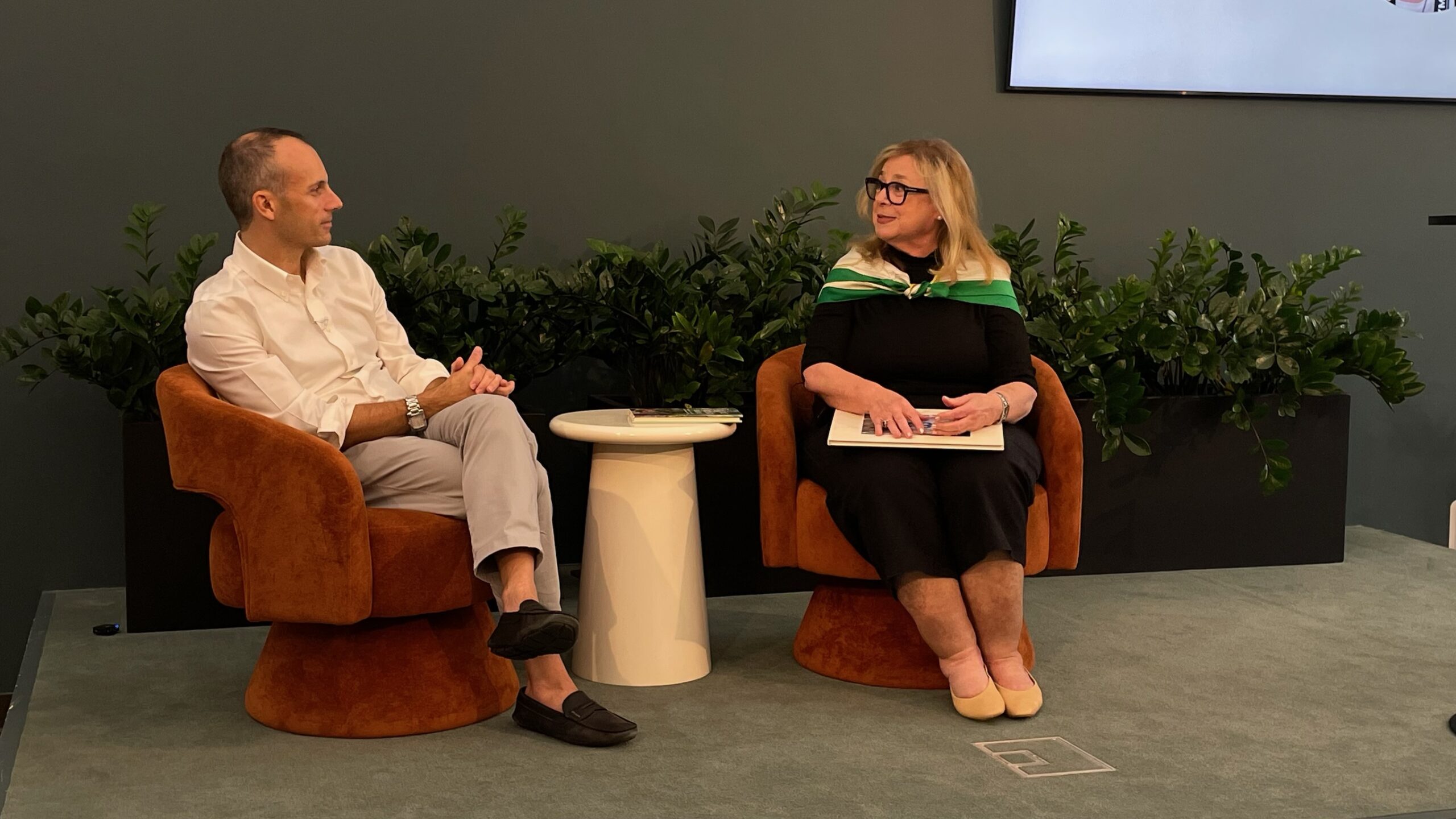
Cindy Hebert, historic property researcher and founder of NOLA Remembered, on what’s buried in notarial records, why the stories inside your walls matter to buyers, and what we stand to lose if no one teaches the next generation to read longhand.
Historic property research in New Orleans is the practice of tracing a building’s ownership, construction, and human stories through notarial archives, Sanborn fire insurance maps, courthouse records, and oral histories, often revealing details that predate the Civil War and connect a home to figures of national significance. For real estate agents, that documented history is a listing tool that creates emotional connection before a single price discussion begins. For homeowners, it is an act of stewardship over one of the most historically dense building stocks in the United States.
Why It Matters
New Orleans sits on centuries of layered ownership, architectural improvisation, and human drama, much of it recorded in old notarial volumes that take real skill to search. Agents and owners who can surface that history have a better story to tell about a house, and a richer one to bring to a listing presentation.
Cindy Hebert spent decades working in Louisiana property records (title work, oil-and-gas abstracting, and a place on the founding team of a title company) before she realized the most valuable thing she could do with all that expertise was tell the stories the records contained. Today she runs NOLA Remembered, an LLC that produces deep-research narrative books, property histories, and historic marker text for New Orleans homeowners, architects, builders, and agents who want to know what actually happened inside a house’s walls.
The State of Play
New Orleans property history is a research discipline with its own tools, gatekeepers, and risks, and most agents and homeowners have never been introduced to any of them. Here is where things actually stand.
You don’t always find good things, but you always find interesting things.
Cindy Hebert, Historic Property Researcher, NOLA Remembered
How Agents Can Use This
The honest answer is that the full depth of what Hebert does (a year of archival research, translation of French and Spanish documents, oral history interviews) is not a two-day listing prep project. But agents working with historic properties in New Orleans don’t need to go that deep to make an impact. There are entry points.
Jeffrey Doussan suggested the Preservation Resource Center of New Orleans (PRC) website as a first stop for checking whether information already exists on a house, and Hebert says the PRC refers research work to her. The PRC publishes a Guide to Researching Properties, and its History & Landmarks Plaque Program will research a building’s history for a fee. With a library card, which is free for Orleans Parish residents, you can also search the New Orleans Public Library’s digitized local newspapers from home, going back to 1837. Hebert counts that online access as one good thing to come out of COVID, when researchers learned to do this work remotely.
For agents who want courthouse records and don’t know where to start, Hebert’s advice is direct: hire an abstractor. Abstractors know where the records live, how the filing systems work by era, and how to work with courthouse staff. Hebert agreed the cost is reasonable, and for this kind of job an abstractor simply pulls the historical documents that show who built the property and when, rather than searching for encumbrances or tax liens. That single piece of information, verified and documented, changes the texture of a listing presentation entirely.
The Lower Garden District and the Garden District show what this looks like in practice. At the time of the conversation, Hebert was working on her second house on St. Mary Street in the Lower Garden District. The Garden District Association runs a Profiles in Preservation program that pairs research by professional historians with a bronze marker for each participating home, and the association’s book from the project profiles more than 100 Garden District houses. Hebert notes that those entries stick to the documented facts rather than the deeper story, but the project shows what is possible at scale.
You’ve got to follow it through. You can’t just look at who bought it, who built it, who lived there. You’ve got to run that out.
Cindy Hebert, Historic Property Researcher, NOLA Remembered
The Stories Inside the Walls
Asked for her most fascinating find, Hebert described a house whose owners, in the middle of a major renovation, found what appeared to be a tomb beneath it: the size of a human body, with concrete formed around it. According to Hebert’s research, a man who once owned the home designed several of the city’s monuments, and a published history of Metairie Cemetery credits him with roughly three-fourths of its grand tombs, though his name appears nowhere in the cemetery. Hebert says he was in charge of the temporary interment of Jefferson Davis, who died on First Street in December 1889, at a time when newspapers reported that people from Chicago planned to steal the body. Her working theory: Davis was hidden beneath the house while the well-known tomb at Metairie served as a decoy. Davis’s remains were moved to Richmond, Virginia, in 1893.
That story is an extreme example, but the pattern holds. Hebert’s research on a Prytania Street house in the Garden District found that the woman who bought it with her husband, a doctor, had grown up on what was then Tivoli Circle (later Lee Circle, now Harmony Circle). Her father was a colonel, and when rain fell during the 1884 dedication of the Robert E. Lee monument there, Hebert says, Lee’s two daughters were ushered up to watch from his balcony. A recent book of hers connected a homeowner to the family that, by Hebert’s account, once owned the land that became Carrollton. A real estate agent listing a house in Jefferson Parish for friends asked Hebert to check the folklore about it before advertising it, and a small amount of research gave the agent information she could stand behind. And on St. Mary Street, Hebert found a previous owner whose father’s house in Nashville, she says, was taken over by the sitting U.S. president during the federal occupation.
Hebert approaches this work with care. She describes a case where early research turned up that the man who built a house had died by suicide inside it. The prospective client, whom Hebert describes as very impressionable, never circled back about the project, and Hebert did not push. “You’ve got to be careful,” she says. “You don’t want to report anything that’s not factual, but you’ve got to be sensitive to those types of issues.” Not every story is one the owner will want to carry.
The Records at Risk
Louisiana’s civil-law tradition, rooted in French and Spanish law rather than the English common law behind every other state’s legal system, gives notaries a central role in property transactions. The Notarial Archives Research Center, run by the Orleans Parish Clerk of Civil District Court, holds notarial acts from 1735 through 1970, arranged by notary and then by date, and many nineteenth-century records there are written in French. Hebert points out that Orleans Parish still has that history, while many smaller parishes lost records to courthouse fires and floods.
When Hebert learned that the Legislature planned to merge the Orleans Parish civil and criminal clerk’s offices, she wrote to the governor. Her worry is institutional knowledge: the historical records she relies on sit in bound volumes, not in any database, and someone has to know how to find them. No member of the Orleans Parish legislative delegation voted for the bill, but it passed anyway, carried by votes from elsewhere in the state, and became Act 15 of 2026. Whether the people who know how to find those records stay on the job is still an open question.
Handwriting is the other worry. Many of the documents Hebert works with are written in nineteenth-century longhand, and she notes that many schools no longer teach cursive. (Louisiana law has required cursive instruction in all public schools since 2017, under La. R.S. 17:266.) If fewer people can read the originals, the AI tools trained on digitized text will keep repeating whatever errors made it into print the first time.
Those are the quiet stakes underneath this conversation. The New Orleans Public Library’s digitized collections and the work of historians like Sally Reeves, the longtime archivist of the New Orleans Notarial Archives, keep this history accessible. Reeves, who Hebert says is fluent in French and Spanish and who helped her translate documents in both languages, has retired, and Hebert wonders who else will know those early records as well.
The Two Sisters and a Lesson About Credit
One of Hebert’s earliest major research projects came long before NOLA Remembered existed. The owners of the Court of Two Sisters, the French Quarter restaurant on Royal Street, had inherited the business from their late father, Joe Fein Jr., who acquired the property in 1963. They asked her to verify and document the history of the two sisters the restaurant is named for, and Hebert worked alongside the late Mel Leavitt, an award-winning New Orleans broadcast journalist who had already written books on the city’s history.
Hebert located where the sisters were buried and found letters exchanged with France. When the book was complete, the Feins asked if she wanted it dedicated to her. She declined and suggested they dedicate it to their father instead. Years later, when she brought the book to a presentation, she looked through it and found no mention of her anywhere. The Court of Two Sisters Cookbook, from Pelican Publishing, is now in its third edition (and, by Hebert’s count, its eleventh printing). When she called about it, one of the sons told her the family no longer had the records from that era.
She tells this story without bitterness. The lesson she draws from it is about knowing the value of your own work and making sure it is credited.
All that to say, never undervalue what you contribute.
Cindy Hebert, Historic Property Researcher, NOLA Remembered
Common Questions
Cindy Hebert’s files run from an 1843 building contract that corrected a published construction date by 22 years to a body-sized tomb under a house that she believes may have briefly held Jefferson Davis’s remains. For agents working with New Orleans’ historic housing stock, the starting tools she describes (historic insurance maps, notarial records, abstractors, and the Preservation Resource Center) are available now, before a listing goes live. The bigger question is what happens to those records as longtime archivists retire, clerk’s offices merge, and AI systems repeat century-old typos as fact. Hebert knows where to look and how to read what she finds. The time to use that knowledge, and to build the habit of documenting a property’s history before it disappears, is now.
About this series. KW New Orleans hosts regular conversations with the leaders shaping our city: developers, architects, historians, and operators building the New Orleans of tomorrow. These are the conversations that happen in the rooms most people don’t get invited into.
KW New Orleans brings together agents who think seriously about this city: its history, its architecture, and its future. If you’re ready to work alongside people who go this deep, we’d love to talk.