
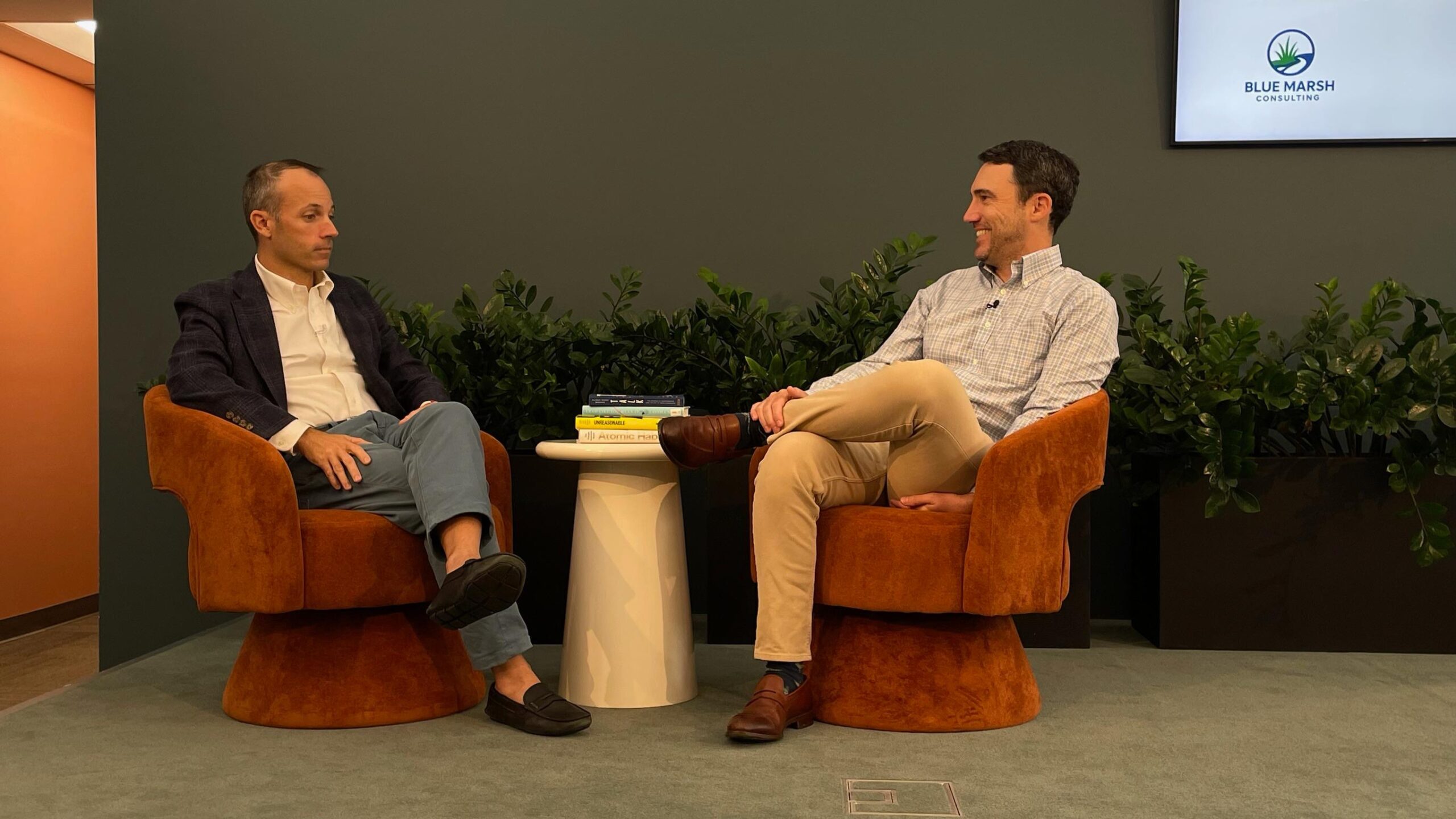
Louis David, Founder of Blue Marsh Consulting and former economic development official, on why opening a business in New Orleans is harder than it should be, and what it actually takes to get it done.
New Orleans has real competitive advantages for attracting businesses and investment (walkable neighborhoods, deep legal and professional infrastructure, and a quality of life that draws talent), but the city’s permitting environment, underfunded economic development apparatus, and the outsized influence of neighborhood opposition on even legally permitted projects create friction that costs investors time and money. Blue Marsh Consulting exists precisely in that gap: helping businesses that make obvious sense figure out the non-obvious process of actually getting open.
Why It Matters
Every week in New Orleans, someone with capital and a solid business idea hits a wall that has nothing to do with their concept and everything to do with the city’s particular version of bureaucratic friction. The project is zoned correctly. The economics pencil. The space is available. And then six months disappear.
Louis David spent years on the other side of that wall, working in economic development, trying to convince companies that New Orleans was worth the effort. After the New Orleans Business Alliance (NOLABA), the city-backed economic development corporation founded in 2010 under Mayor Mitch Landrieu and wound down under Mayor LaToya Cantrell’s administration about a year and a half ago, David launched Blue Marsh Consulting to work the problem from a different angle: not trying to lure Fortune 500 companies to Orleans Parish, but helping the businesses and investors already sold on New Orleans get through the door.
The State of Play
New Orleans sits at a strange inflection point: the region around it is attracting major industrial and technology investment, the Super Bowl demonstrated what the city looks like when it’s operating well, and the new mayoral administration is taking over a city government with real fiscal constraints. Here’s what that means on the ground.
Most companies think the government’s out to get them, and most governments think the companies just don’t want to pay taxes, and often their desires all line up in the middle.
Louis David, Founder & Principal, Blue Marsh Consulting
The Hidden Tax on Doing Business Here
Long before a business owner files a permit application, New Orleans extracts a cost that never shows up on a pro forma. Call it the friction tax.
Executives relocating from Dallas, Atlanta, or Houston arrive expecting to make one set of decisions: where to live, where to put the office, where to send their kids to school. In New Orleans, that third question opens a whole separate conversation. The city’s public school system has improved substantially since Hurricane Katrina, but explaining that system to someone who has never encountered a city where private and parochial schools serve the role they do here is its own project. Companies effectively pay their relocated employees more to compensate, a premium that compounds the already higher cost of doing business in a city with older infrastructure, a distinctive legal environment, and fewer of the big-box retail amenities that most Americans treat as baseline.
The retail gap is its own loop. National brands want parking, and the older commercial corridors (Magazine Street in Uptown, the stretches of the French Quarter) can’t provide it. Rents on Magazine Street have run $40–$50 per square foot for years, not because national tenants drove them there, but because renovating old buildings costs money regardless of who signs the lease. The result is that residents drive 25 minutes to Jefferson Parish for things they’d prefer to buy five minutes from home, which means sales tax that could stay in Orleans Parish leaves it. David’s argument is pragmatic: if the city wants those tenants in New Orleans East, in Algiers, or along Carrollton (where the parking is actually possible), it will need to offer something that closes the gap between the cost of building there versus the eleventh store in Katy, Texas.
What Blue Marsh Actually Does
The simplest version of David’s pitch: if a project makes sense but you don’t know how to make it happen, call him. If you need a real estate attorney, call one of those. The two are not substitutes.
He describes two recent engagements that are more instructive than any general description. The first is Holy Sheets, a laundromat brand that David describes as “the Target of laundromats”: all new equipment, wash-and-fold service, no TVs or vending machines designed to encourage loitering. Holy Sheets already operated on Broad Street in Mid City and recently opened a Louisiana Avenue location in the Lower Garden District. The project was permitted. The equipment was financed. What it couldn’t afford was six months of delay caused by a neighbor who went to their council member.
David’s work on that project was almost entirely about the neighborhood meeting. He helped the ownership show photos of what their existing stores looked like. He made sure neighbors got to meet Greg, the local owner, directly. The meeting that started with questions about parking and noise ended with neighbors asking whether Holy Sheets could clean wedding dresses. That shift, from opposition to enrollment, is what he gets paid to engineer.
The second project is thornier and more relevant to real estate investors: a local buyer purchased a church that had sat abandoned since Katrina in his own neighborhood and is converting it into two residential units with commercial space below. The commercial component is the complicated part. David’s approach is to start with the council member rather than end with them: ask what uses they’d actually support in that location, then work backward through the permitting process to achieve it. The investor is putting hundreds of thousands of dollars into a property that’s been vacant for two decades. The council member’s office gets a story about neighborhood infrastructure investment. The neighborhood gets a new street, a new sidewalk, and the closing of a troubled bar nearby. The framing matters as much as the filing.
People from Dallas, Atlanta, Houston do not understand paying a million dollars for a house and then having to worry about where their kids are going to go to school.
Louis David, Founder & Principal, Blue Marsh Consulting
Louisiana’s Bigger Moment and New Orleans’ Cut
The parishes surrounding New Orleans are, by any measure, having a moment. The question is whether Orleans Parish captures any of it.
Richland Parish has announced a massive data center project. A third-party data center is slated for St. Francisville. SpaceX has established facilities near Pecan Island in the Lafayette area. Ascension Parish announced a Hyundai Steel plant. These are not marginal investments; they are the kind of anchor projects that permanently reshape a local economy. None of them are in Orleans Parish.
David’s optimism about the spillover rests on what New Orleans actually has that smaller Louisiana markets don’t: commercial airport connectivity, a large medical complex, and established offices of major national accounting and law firms. When industrial projects of this scale land in Louisiana, they generate ongoing demand for legal work, engineering services, and financial expertise. Saronic, a Texas-based company building autonomous marine vessels near Franklin in St. Mary Parish, has already announced plans to put approximately 40 people in downtown New Orleans for its engineering and legal operations. That is the model David is pointing to: New Orleans as the professional-services hub for a regional industrial expansion, even when the industrial facilities themselves are elsewhere.
He adds one counterintuitive asset to that argument: Louisiana’s civil law system, derived from the Napoleonic Code and unlike the common-law framework used by every other U.S. state. The same legal distinctiveness that makes national retailers hesitate also means that any company with serious Louisiana operations needs Louisiana-licensed attorneys, Louisiana-credentialed accountants, and local engineers who understand the state’s regulatory environment. That creates sticky, high-value professional employment that tends to concentrate in the city with the deepest professional infrastructure, which is New Orleans.
The Arena, the Convention Hotel, and Getting the Infrastructure Right
Two large capital investments are reshaping the case New Orleans makes to event organizers, and David has a clear read on both.
The Smoothie King Center, the arena that houses the New Orleans Pelicans, is not going to be demolished and rebuilt elsewhere. The cost of a new facility rules that out, and both Governor Jeff Landry and Saints owner Gayle Benson have publicly committed to keeping NBA basketball in New Orleans, which means doing something with the existing building. The arena’s real limitation is its size: it sits in an awkward middle range, too small for the revenue model that the NBA prefers today. David’s view is that the answer is outside the building rather than inside it: extending Champions Square, activating the publicly owned parking lots that ring the arena, and creating an outdoor experience that makes the complex a destination on days when there’s no game.
The new convention center hotel, the Omni New Orleans, drew criticism for its payment-in-lieu-of-taxes arrangement, but David points to the structural problem it’s meant to solve: New Orleans has plenty of large hotel capacity for massive conventions and plenty of boutique options for leisure travelers, but very little quality hotel inventory suited to the 500-to-1,500 person corporate event. A senior official at a major sports league that recently hosted a large event in the city told David directly that the single biggest obstacle to putting New Orleans on the regular rotation was the quality of hotel rooms available for high-dollar sponsors and advertisers. He notes that the Bureau of Governmental Research (BGR, the nonpartisan New Orleans policy research organization) pushed for specific tweaks to the Omni deal’s structure, got them incorporated, and then supported the project. That is the process working as it should.
I think to get something done in the city, it has to be grassroots.
Louis David, Founder & Principal, Blue Marsh Consulting
The Neighborhood as the Unit of Change
David came up as a journalist in Lafayette, which means he spent years watching how stories about New Orleans were received by the audiences most likely to drive down for a weekend. That experience shapes how he thinks about the city’s recovery narrative.
For a long time, the fill-in-the-blank question “what else happened in Louisiana today?” was answered, at six o’clock news broadcasts from Shreveport to Lake Charles, by New Orleans crime coverage. The people those broadcasts reached (in Baton Rouge, Lafayette, and across the Gulf South) are exactly the people who can most easily drive to New Orleans twice a month for dinner, concerts, and Saints games, or own a weekend condo in the city. David believes the investments made around the 2025 Super Bowl (enhanced police presence in the French Quarter, infrastructure improvements, concentrated attention on the city’s public face) are still paying out in changed perception among that regional audience.
The neighborhood level is where he thinks the real quality-of-life competition is won or lost. His benchmark is simple: what can you walk to? The coffee shop. The corner bar. The restaurant that’s been there for 30 years. He spent a Friday morning in Denver walking through a “historic neighborhood near downtown” and found art galleries that were only open on weekend evenings and no one on the sidewalk. New Orleans’ walkable commercial corridors are the thing other cities spend decades and enormous capital trying to manufacture. The Treme and the Bywater have it. The challenge is making sure the economics of running a small business in those corridors stay viable as costs rise across the board (coffee, cups, labor, credit card transaction fees) without the character that makes those corridors worth visiting disappearing with them.
On Armstrong Park and the Municipal Auditorium, both significant public assets adjacent to the Treme that have sat underused for years. David is careful. There have been proposals. There has been opposition to those proposals. Leadership at various points has walked away rather than force a compromise through a sensitive set of histories. His read is that Rampart Street is genuinely better than it was a decade ago, with new streetcar service and more commercial activity, but that the Hard Rock Hotel collapse and COVID together snuffed out what might have been a corridor renaissance. The opportunity remains. The political will to capture it is another matter.
Common Questions
Louis David’s argument is structural, not sentimental: New Orleans doesn’t fail to attract and retain businesses because people don’t want to be here. It fails because the process of getting open is expensive in ways that don’t appear on any fee schedule, and because the city has never built the stable, off-budget funding mechanism that would let economic development work run across multiple administrations instead of resetting with each one. The parishes that do this well (Jefferson, Lafayette) fund it automatically and independently. Meanwhile, New Orleans watches major Louisiana investments announce in Richland, Ascension, and St. Mary Parish and hopes the professional-services work finds its way downtown. That hope isn’t unreasonable: Saronic’s decision to put 40 people in the city for engineering and legal work is exactly the model, but it won’t become a pattern until the city treats economic development as infrastructure rather than a line item that disappears when the budget gets tight. The opening is there. Mayor Moreno’s second term, if it comes, is when David thinks the city gets to find out whether it takes it.
About this series. KW New Orleans hosts regular conversations with the leaders shaping our city: developers, architects, investors, and operators building the New Orleans of tomorrow. These are the conversations that happen in the rooms most people don’t get invited into.
KW New Orleans brings together the sharpest minds in real estate, development, and economic growth. If you’re ready to work alongside people building the city’s future, we’d love to talk.