
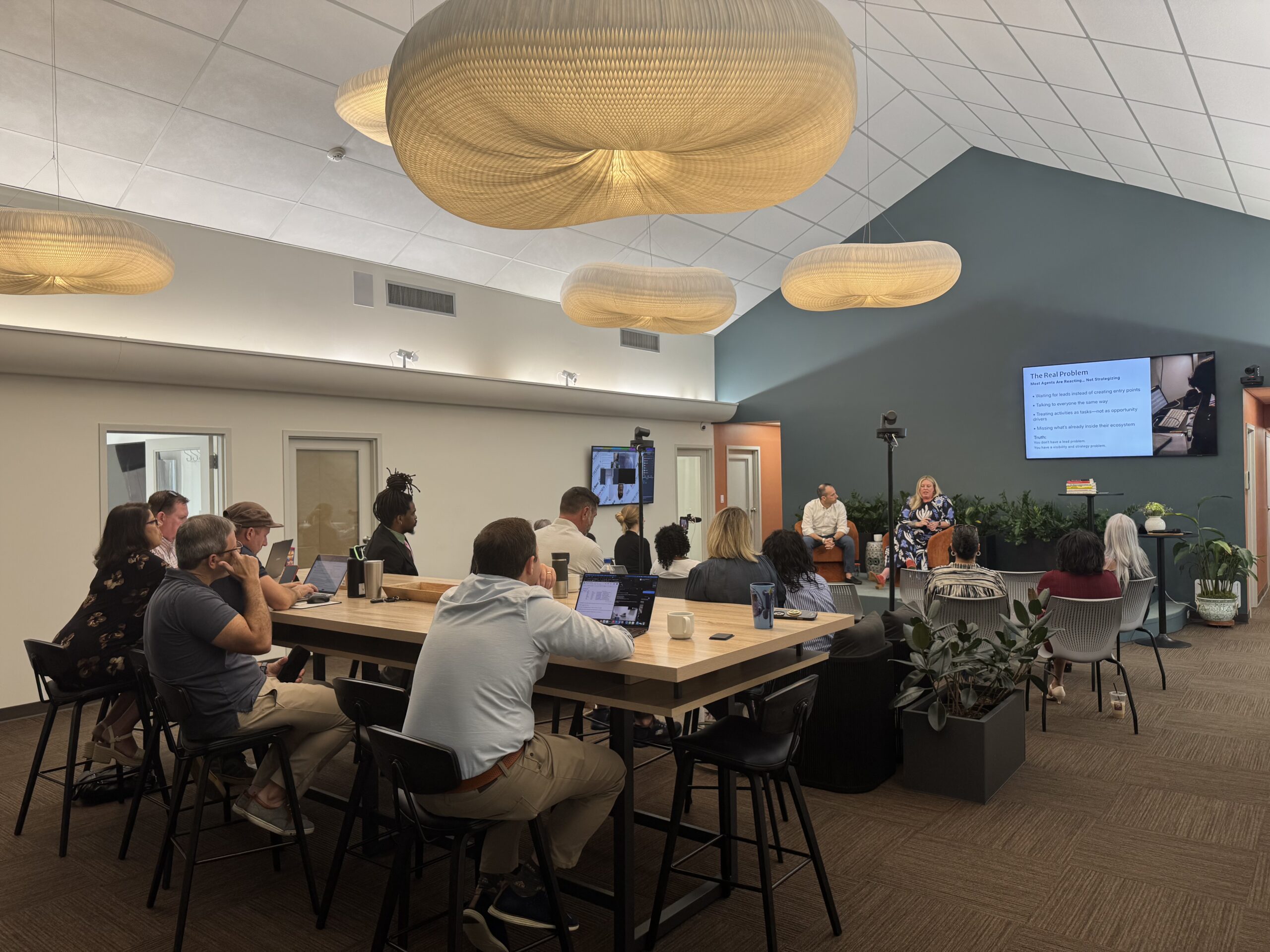
The leadership team at KW New Orleans on why lead ownership is the foundation of agent freedom, and how a new AI phone system turns ~15,000 annual calls into a direct line between clients and agents.
Why It Matters
Most brokerages talk about supporting agents. Fewer are willing to say out loud that the brokerage itself should be invisible in the transaction: a conduit, not a gatekeeper. At KW New Orleans, that distinction is not marketing language. It is the operating model.
During a recent office-wide meeting, Team Leader Cody Caudill, Operating Principal Jeffrey Doussan, and Coach and Co-Broker Nichole Donald pulled back the curtain on two interconnected ideas that define how the brokerage thinks about its role: the principle of agent-owned leads, and a new AI-powered phone system called Riley (see also: Why Human Connection Wins in the AI Era) designed to connect callers directly to the agent they want, without the brokerage sitting in the middle.
The State of Play
The conversation inside the office meeting was blunt about what separates KW New Orleans from brokerage models that position themselves as the portal between agent and client. Four dynamics frame the difference.
You’re our customer. We would not exist if you weren’t here. You’re listing your lead. We’re not trying to go get the client for you. We’re trying to get you to the client that wants you.
Jeffrey Doussan, Operating Principal, KW New Orleans
Why Lead Ownership Changes Everything
The distinction between a lead that belongs to an agent and a lead that belongs to a brokerage sounds abstract until you think about what happens when an agent leaves. At a portal-model brokerage, the lead stays. At KW New Orleans, the lead goes with the agent, because it was always theirs.
Doussan raised the contrast directly during the meeting: third-party lead sources like Zillow and Realtor.com are expensive, and more importantly, buying leads from those platforms does not build a replicable business. It builds a dependency. The goal of the brokerage’s infrastructure (the AI phone system, the Command CRM, the 28-year-old search presence) is to generate demand for agents organically, then hand that demand off cleanly, without extracting a fee or inserting the brokerage brand into the relationship.
Caudill put it in terms of architecture: some brokerages want to be the portal. KW New Orleans is actively trying to cut itself out of the picture. The brokerage exists to serve agents. Agents exist to serve clients. Those two things should not get tangled.
How Riley Works in Practice
The mechanics of the Riley AI phone system are straightforward, which is part of the point. Simplicity at the technology layer means speed at the human layer.
A caller dials the main office number. Riley answers, asks who they want to reach, and within seconds sends the caller a text containing that agent’s direct phone number and email address, pulled from the office roster. Simultaneously, the agent receives their own text alert: someone is looking for you, here is their number. If the agent does not receive a call within a few minutes, they have everything they need to reach out first.
Caller ID and social data deepen the picture over time. A caller who has interacted with an agent’s Facebook content, for example, may already be identifiable by name before they say a word. The system is designed to get sharper, not flatter. And the cost to agents: nothing. The office absorbs it as part of the support infrastructure.
Leads that are calling for you. That’s our big thing, leads that are calling for you.
Jeffrey Doussan, Operating Principal, KW New Orleans
The Belief System Behind the Technology
Technology choices are belief statements. The decision to build a phone system that routes callers away from the brokerage and toward the agent is not a neutral infrastructure decision; it is a declaration about who the client belongs to.
At KW New Orleans, that declaration shows up in the values the office publishes: transparency in economics and expectations, growth through coaching and collaboration, and a culture that is explicitly no-drama. These are not aspirational posters. They are the filter through which staffing decisions, technology investments, and brokerage economics get made. The Entrepreneurial Freedom, Real Support framework means that the 11-person back-office team, the Transaction Concierge service, the ALC trainings, and now Riley all exist for one purpose: to give agents more time with clients and less time managing the machinery around them, from appraisals to closings.
The office’s goal of growing from 136 agents to 200 is built on the same logic. More agents affiliated with the same address and phone number means more search authority, which means more inbound calls, which means more leads routed directly to agents. The network effect compounds. The brokerage gets more useful the larger it grows, but only if it stays out of the way.
KW New Orleans is making a specific architectural bet: that a 28-year-old phone number, an AI assistant named Riley, and an explicit refusal to play portal will generate more durable agent businesses than any lead-purchase program on the market. Inbound calls are climbing toward 15,000 a year. The system now routes every one of them directly to the agent the caller wants, with a simultaneous heads-up so the agent can follow up before the caller’s attention moves on. The leads belong to the agent on day one, and they leave with the agent if they ever go. That is not a benefit. It is the entire model, and it is just getting started.
About this series. KW New Orleans hosts regular conversations with the leaders shaping our city: developers, architects, investors, and operators building the New Orleans of tomorrow. These are the conversations that happen in the rooms most people don’t get invited into.
Be in the Room Where It Happens
KW New Orleans brings together the sharpest minds in real estate, development, and hospitality. If you’re ready to work alongside people building the city’s future, we’d love to talk.