
Sponsoring Broker Clayton Fields on text message liability, the agency disclosure timing trap, E&O insurance claims, and the paperwork habits that help keep agents out of court.
Lawsuits are reaching real estate agents more often, according to KW New Orleans leadership, and many have little to do with anything the agent did wrong. How those cases end often turns on paperwork and communication habits. Louisiana requires the agency disclosure form at the first “substantive contact,” the point where a consumer’s confidential information is solicited or received. Client texts can be pulled into a lawsuit along with the personal chatter mixed into them. Any demand letter should go to the broker right away so it can be reported to the Errors and Omissions (E&O) carrier. Getting those habits right is the foundation of liability protection.
Why It Matters
KW New Orleans is seeing more lawsuits involving its agents, often when no agent did anything wrong. When the economy tightens, some buyers and sellers go looking for someone to blame. In that climate, every text message, every unsigned form, and every late insurance notice can become ammunition.
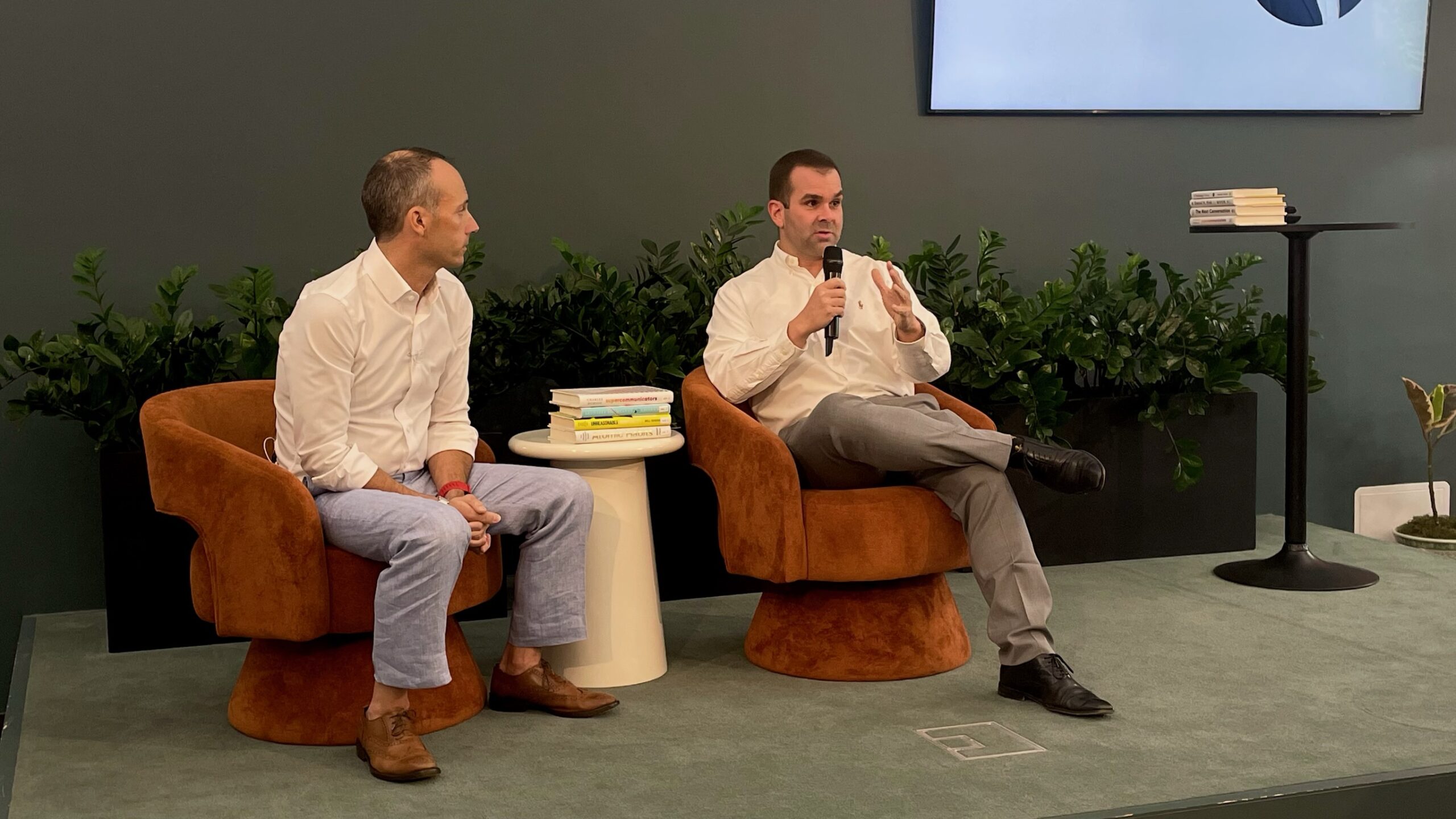
Clayton Fields, sponsoring broker at KW New Orleans, joined Operating Principal Jeffrey Doussan at the brokerage’s September 2, 2026 team meeting for a frank conversation about the liability risks agents face right now. As broker, Fields deals with the demand letters and insurance claims that reach the brokerage, and with the Louisiana Real Estate Commission (LREC) when questions come up. His message was direct: 999 times out of 1,000, none of this becomes an issue, but agents need their paperwork right for the one time it does.
The State of Play
Doussan compared the current wave to 2009 and to the slowdown about three years ago: when buyers have less money than they thought they had, some turn to the courts to get it back. That pulls agents into disputes they did not start, such as a buyer’s claim that a seller should have disclosed something.
We do so much business with friends. That’s the problem, and we mix all of that into these text messages and these emails about, hey, what are we doing on the weekend, or like something else that’s going on, and then those people… they’re going to poke holes into everything that you say and do in that. So you have to be really careful with all of that communication.
Clayton Fields, Sponsoring Broker, KW New Orleans
The Communication Problem
Real estate is a relationship business, and as Fields put it, agents do a lot of business with friends: neighbors, former colleagues, family friends. That closeness is an advantage right up until a transaction goes sideways.
Once litigation begins, every text exchange between an agent and a client during the relevant period is fair game. That includes the jokes, the venting, and the offhand comments about someone being a pain. As Fields warned, all of it can come out, and the agent ends up “sitting in mediation trying to explain that,” months or even years after hitting send.
The practical answer is to stay friendly with clients while treating every deal-related message as a professional record from day one. Doussan’s suggestion: agree with the client that the transaction will be discussed on one channel only. If there are no records of the deal on a channel, there is nothing there to produce. Where that’s not realistic, the standard is simpler: don’t write anything in a client text that you wouldn’t want read aloud in a conference room. Deleting texts after a dispute starts is a different matter entirely; Fields’ advice on that was “please don’t.”
Doussan added the other side of it: communications that could vindicate an agent deserve the same care as risky ones. If an agent pushed back on a client decision in writing (urged an inspection, flagged a property concern, recommended a professional over a relative), that email or text should be saved right away. His practice is to make a PDF of it and put it in the file in Command, Keller Williams’ agent platform, right then and there, so nobody has to remember five years later that the email exists.
The Agency Disclosure Timing Rule
Louisiana rules require licensees to give the agency disclosure form (or the Commission’s agency disclosure informational pamphlet) at the time of “substantive contact” (La. Admin. Code tit. 46, pt. LXVII, §3703). State law defines that as the point in any conversation where confidential information is solicited or received, such as a consumer’s financial qualifications, motives, or objectives, and it includes texts and email (La. R.S. 9:3891). That moment usually comes well before the purchase agreement and often before the first showing.
Doussan described a recent case that shows the risk. A challenge to a transaction was brought to the LREC and dismissed. What didn’t get dismissed was the timing of the agency disclosure: the agent had not sent it before starting to give advice, and the agent, a good one by Doussan’s account, was fined on that technicality.
Fields said investigators look for exactly that: when did you send it? If advice shows up in a text or email before the disclosure went out, that is an exposure. His other point: even when a client refuses to sign, an agent who can show a real attempt to do the right thing is in a far better position, though he noted that how much that helps can depend on the investigator. The rule itself requires a record. When a party refuses to sign, the licensee must document the nature of the proposed transaction, when the form was provided, and the reason given, and keep that documentation for five years (§3703).
Doussan offered a practical test, while noting the difference between best practice and the exact letter of the law. Explaining your process, how you work, and what services you provide is a consultation. The moment you tell a client what they should do (price the house here, clean this up, get a pre-inspection), you are giving advice, and the disclosure needs to come first. Asking about a client’s budget or motivation can trigger the requirement too, since that is confidential information. His simplest advice: get it signed early, because most clients don’t mind. For a fuller walkthrough, see Agency Disclosure Done Right and the KW New Orleans Learning Center.
If someone doesn’t sign it or they’re refusing to sign it, if you can at least show that you tried to do the right thing, we can make a hell of an argument that hey look this person did their due diligence. They were trying to do the right thing. You can’t get mad at them that this person didn’t sign it.
Clayton Fields, Sponsoring Broker, KW New Orleans
Inspections, Waivers, and Uncle Jimmy
In Fields’ experience handling claims, the E&O carrier works from a checklist: Did you have an agency agreement? Did you have a buyer broker agreement? And the biggest one: did the buyer have an inspection and due diligence period?
KW New Orleans requires a due diligence notification form with every purchase agreement, and Freas noted that agents should give it to buyers when they first meet. The form explains the inspection and due diligence period and makes clear that using those rights is the buyer’s call. It sits outside the contract and leaves a record that the buyer was told. Doussan said it has gotten the brokerage out of lawsuits more than once.
The harder scenario is the buyer who skips a professional inspector. Fields’ example was the client who says Uncle Jimmy has been in construction all his life and should do the inspection. That’s the buyer’s right, but the agent’s job is to document that it was a knowing choice. Fields wants a signed statement that the buyer had the opportunity to hire a professional home inspector and chose not to, and the same goes for a buyer who waives inspections entirely. Pair that with an email in which the agent recommended a professional inspection, and the file tells the story on its own.
What to Do When the Letter Arrives
Receiving legal correspondence is alarming the first time. It is less alarming once agents understand how the process works and why speed matters.
The moment an agent receives anything that could be a legal demand (an email or letter from an attorney’s office, a notice of claim, anything tying a transaction to a dispute), the right move is to bring it to the broker immediately rather than decide alone whether it is serious. Fields said the staff needs to know right away so the brokerage can get it to the Errors and Omissions carrier. At KW New Orleans, the leadership team will look at whether it is a demand letter and, if it is, start the claim.
Errors and Omissions insurance, professional liability coverage for claims of negligence, errors, or omissions in an agent’s professional services, is mandatory for every active Louisiana licensee (La. R.S. 37:1466). Under the Commission’s group policy, administered by Rice Insurance Services Company (RISC), a claim must be reported to the carrier in writing as soon as possible and no later than 90 days after the licensee becomes aware of it, and RISC warns that late reporting can jeopardize coverage. A claim can be as simple as a written demand for money or services; RISC notes that even an email can qualify. Agents covered by a firm policy should check that policy’s terms. Once the claim is in, the carrier’s attorney steps in and, as Fields put it, “then we step out.” Doussan warned that a case can take five years to resolve. Fields said most of the time the other side gets so frustrated with the process that they give up, and he has seen only two cases where the insurer had to pay out.
Fields also noted that when a demand letter comes in, KW New Orleans tries to act as a neutral party, hearing both sides and looking for a way to resolve it without getting E&O involved. When the carrier does need to step in, “it’s not some big scary thing,” he said. The agent hands over the documents and the carrier takes it from there.
It’s so much better to pay that $1,000 deductible to have the attorney step in and then we step out, then have to say, okay, hey, we need to set aside 10, 15, $20,000. It’s going to cost $30,000 for us just to go to court.
Clayton Fields, Sponsoring Broker, KW New Orleans
Common Questions
Fields and Doussan agreed that the lawsuits KW New Orleans is seeing are largely a sign of the times, driven more by economic pressure than by agent wrongdoing. Agents who mixed business and personal texts carelessly, skipped the agency disclosure form, or didn’t get a waiver signed when a buyer passed on an inspection give opposing counsel something to work with. The habits in this conversation are simple: the due diligence notification form (which has already gotten the brokerage out of lawsuits), the early agency disclosure, the fast E&O report, and the PDF in Command. As Freas summed it up, the goal is that when an agent gets dragged into one of these cases, the paperwork is already how it is supposed to be.
About this series. KW New Orleans hosts regular conversations with the leaders shaping our city: developers, architects, investors, and operators building the New Orleans of tomorrow. These are the conversations that happen in the rooms most people don’t get invited into.
KW New Orleans brings together the sharpest minds in real estate, development, and hospitality. If you’re ready to work alongside people building the city’s future, we’d love to talk.